
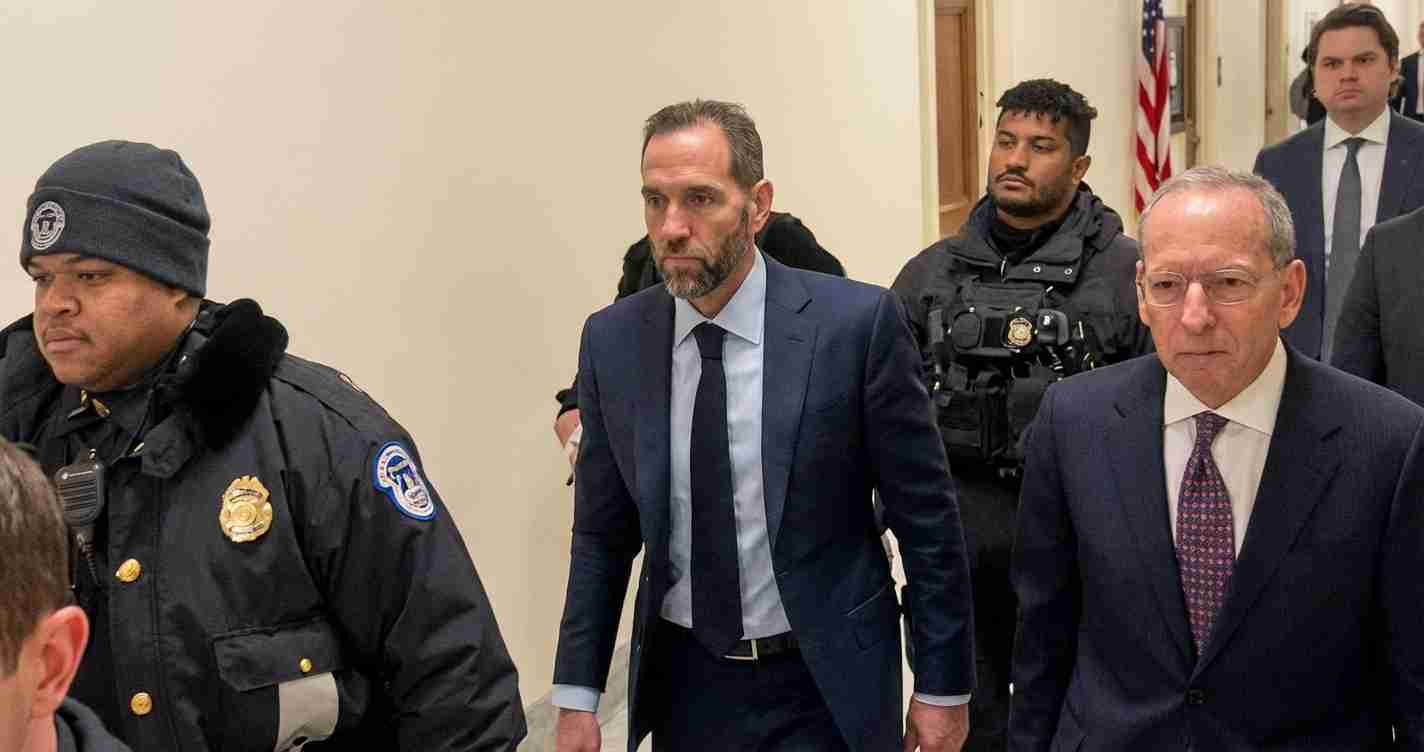
Special Counsel Jack Smith defends Trump investigations in eight-hour closed-door testimony, says Trump “caused” Jan. 6 violence and case would have led to conviction
Special Counsel Jack Smith testified to the House Judiciary Committee on Dec. 17, 2025, in an eight‑hour closed-door deposition, defending his two prosecutions of former President Donald Trump and asserting that Trump “caused” the Jan. 6 violence while the election case “would have led to a conviction.”
- Eight-hour closed-door deposition: Smith vigorously defended both prosecutions and asserted prosecutorial independence (sources: ReadTPA; MTPR).
- Blamed Trump for Jan. 6: Smith said the attack “does not happen without him” and called Trump “the most culpable” in the conspiracy (source: MTPR).
- Prosecutorial independence and strength: Smith asserted he would have prosecuted regardless of party and said the election-interference case “would have led to a conviction” (sources: ReadTPA; MTPR).
Deposition overview
Special Counsel Jack Smith spent roughly eight hours in a closed-door deposition before the House Judiciary Committee on Dec. 17, 2025. He laid out the rationale for two separate prosecutions of former President Donald Trump, repeatedly emphasizing that his office followed facts and law, not politics (sources: ReadTPA; MTPR).
Smith’s claim of independence and decision-making
“When I took this case, I did not know enough about the facts or the law to have a judgment about whether we should proceed in either case,” Smith told lawmakers, stressing that the office did not begin the probes with a predetermined outcome (source: ReadTPA).
Pressed on political motivation, Smith rejected that notion, saying he would have charged “regardless of whether that President was a Republican or a Democrat.” When asked whether he had ever prosecuted someone he did not believe was guilty, he replied plainly: “Never.” (source: ReadTPA).
Accountability steps and handling of bias
Smith described concrete steps to guard the probe from conflicts: he removed an FBI agent after finding a private email showing personal disputes tied to Jan. 6. He presented this as evidence his office monitored and addressed conflicts of interest (source: ReadTPA).
On witness intimidation: Smith called it “probably the most corrosive thing that can happen to the rule of law,” referencing past cases involving threats, murdered witnesses and overseas intimidation tactics.
Assessment of Trump’s role in Jan. 6
Smith offered a stark judgment: he said Trump “caused” the Jan. 6 violence, that the unrest was “foreseeable,” and asserted the attack “does not happen without him.” He described Trump as “by a large measure, the most culpable and most responsible person in this conspiracy” (source: ReadTPA; MTPR).
Smith also cited public communications, saying some of Trump’s social media posts endangered lives, and singled out a tweet that he said “endangered the life of his own vice president,” underscoring the potential dangers of presidential rhetoric (source: ReadTPA).
Strength of the election‑interference case
Smith told the committee the election-interference prosecution was strong and “would have led to a conviction.” He emphasized that testimony from Trump allies who chose country over party provided key evidence. “Our case was built on, frankly, Republicans who put their allegiance to the country before the party,” he said (source: MTPR).
On records, transparency and denied public testimony
Smith confirmed his office had obtained Senate phone records from the Jan. 6 period; he said those records showed timestamps of calls between lawmakers and Trump aides (not call content) and were collected to trace actions during the attack’s key hours (source: MTPR).
Smith said he requested a public hearing to defend his office and stand up for career prosecutors and agents who had been publicly vilified; Republicans on the committee denied that request (source: ReadTPA).
Potential for retaliation and the DOJ indictment question
When asked if he would be surprised if President Trump used the Justice Department to retaliate against him, Smith answered twice: “No.” He pointed to posts on Trump’s platform calling him a “deranged lunatic,” “psycho,” and “criminal,” and said those posts amounted to directions for formal retaliation in his view (source: ReadTPA).
Why this matters now
Smith was appointed by then-Attorney General Merrick Garland in 2022 to lead probes into the effort to overturn the 2020 election and the retention of classified documents at Mar-a-Lago. His closed-door deposition provides a rare inside look at how the Special Counsel defended charges and the work of career prosecutors (sources: ReadTPA; MTPR).
Implications for the United States of America
- Rule of law & prosecutorial independence: Smith’s testimony emphasizes fact‑and‑law‑driven decision making; for some Americans this reassures, for others it will not settle politicization concerns (source: ReadTPA).
- Political consequences: The exchange will likely deepen partisan divides and spur Republican oversight; Smith’s warning about potential DOJ reprisals raises new questions about federal retaliation (source: ReadTPA).
- Public safety & civic trust: Labeling Trump central to Jan. 6 focuses debate on how leaders’ words affect safety, potentially shaping preparedness and accountability discussions (source: MTPR).
- Institutional transparency: Smith’s request for public testimony and its denial highlight tensions between transparency and necessary secrecy for prosecutorial matters (source: ReadTPA).
- Legal and election‑year stakes: With the 2026 cycle underway, Smith’s assertion that the election case “would have led to a conviction” feeds public debate about accountability and the justice system’s role in high‑stakes politics (source: MTPR).



