
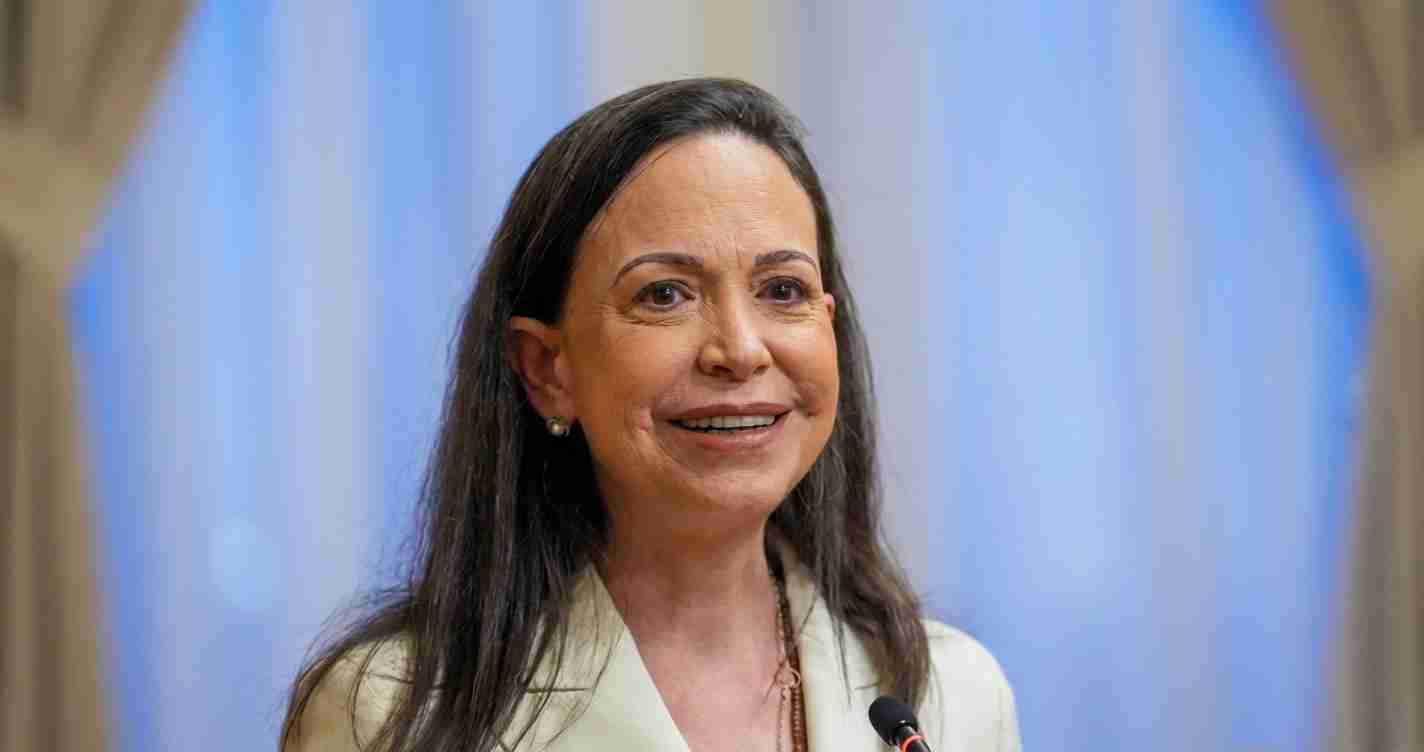
Nobel Institute rejects talk that María Corina Machado can give or share her Nobel Peace Prize with Donald Trump
Venezuelan opposition leader María Corina Machado, awarded the 2025 Nobel Peace Prize, said she would like to symbolically share or dedicate the prize to Donald Trump after Nicolás Maduro’s capture — a proposal the Nobel Institute says is legally impossible.
Key takeaways
- Machado won the 2025 Nobel Peace Prize for defending democratic rights and pushing for a peaceful transition in Venezuela — cited by Time.
- She publicly dedicated the prize to Donald Trump and said she would like to “give or share” it as a symbolic gesture after Maduro’s capture (reported by CBS News and Fox News).
- The Norwegian Nobel Institute clarified that a Nobel Prize “cannot be revoked, shared, or transferred” once announced; the decision is final (Sky News, Anadolu Agency).
Main content
What the Nobel recognized
The Nobel Committee described Machado as “one of the most extraordinary examples of civilian courage in Latin America in recent times,” awarding her the 2025 Nobel Peace Prize for sustained, nonviolent defense of democratic institutions in Venezuela. The citation emphasized her domestic activism and leadership within the opposition movement rather than any single foreign operation or arrest (Time).
What Machado said and where
Following the announcement, Machado repeatedly called the award “a prize of the Venezuelan people,” dedicating it to Venezuelans and to President Trump. In an interview on Hannity (Fox), she framed giving or sharing the award with Trump as a symbolic gesture of gratitude for U.S. action that led to Maduro’s capture (coverage by CBS News and Fox News).
“I would like to give or share this prize with President Trump,” Machado said, calling the idea a symbolic expression of the Venezuelan people’s gratitude.
Trump’s response
Donald Trump told interviewers he considered Machado’s gesture “a great honor” and said he expected to meet her in Washington, calling her “a very nice woman.” At the same time, the former president stopped short of endorsing Machado as Venezuela’s immediate leader, noting she “doesn’t have the support within the country” to govern and signaling short-term backing for Delcy Rodríguez in the transition period (reported by Time and CBS News).
Nobel Institute’s ruling: no transfer, no sharing
The Norwegian Nobel Institute issued a concise, firm statement in response to widespread coverage of Machado’s remarks: a Nobel Prize, once announced, “cannot be revoked, shared, or transferred”. The Institute emphasized the finality of the Committee’s decision: “The decision is final and stands for all time.” That clarification was reported consistently across international outlets (Sky News, CBS News, Fox News, Anadolu Agency).
Why the legal line matters
Nobel rules name specific laureates and lock the formal record: laureates may dedicate their prize symbolically or praise contributors, but they cannot reassign the award. The Institute’s statement sought to prevent conflating rhetorical dedications with changes in legal status or institutional record (Sky, Anadolu Agency).
Timeline of events
- Nobel announcement: The Nobel Committee awards Machado the 2025 Nobel Peace Prize for her pro‑democracy work (Time).
- Jan. 3: U.S. forces carried out an operation that captured Nicolás Maduro; U.S. officials later announced charges in New York (CBS News, Sky).
- Machado’s interviews: She appears on U.S. media, dedicates the prize to Trump and says she would like to give or share it (Fox News, CBS News).
- Nobel Institute statement: The Norwegian Nobel Institute clarified that Nobel prizes cannot be transferred (Sky, Anadolu Agency).
Machado’s journey to receive the prize
Accounts indicate Machado left Venezuela discreetly and traveled to Norway to accept the award, reflecting security concerns faced by opposition figures. At the ceremony she reiterated that the prize represented the courage of Venezuelan civilians and again dedicated it to the people and to Trump (Fox News).
How media framing became muddled
The idea that Machado could legally hand the Nobel Peace Prize to Trump spread rapidly online, blending symbolic dedications, political theater, and rhetorical praise with misunderstandings of Nobel procedure. The Institute’s clarification separated aspirational or rhetorical claims from the institutional reality that the laureate designation is fixed (CBS News, Sky, Fox).
Implications for the United States
Political optics: Machado’s dedication creates a high‑profile moment that bolsters a foreign‑policy narrative favorable to Donald Trump and provides Republicans with a talking point linking U.S. action in Venezuela to praise from an opposition leader (Time, CBS News).
Legal and institutional clarity: The Nobel Institute’s statement underscores that symbolic praise differs from institutional endorsement; the clarification matters for audiences attentive to international norms and record-keeping (Sky News, Anadolu Agency).
Electoral politics and policy debate: Machado’s praise and Trump’s acceptance of symbolic credit may influence debates over U.S. intervention and the use of force. For some, the episode validates assertive action; for others, it raises concerns about long-term costs and unilateral tactics (Time).
U.S.-Venezuela transition: Machado’s status as a Nobel laureate complicates which Venezuelan leaders the United States will endorse during the post‑Maduro reorganization. International recognition does not automatically secure political backing, a point underscored by Trump’s cautious posture toward Machado’s immediate leadership prospects (Time, CBS News).



