
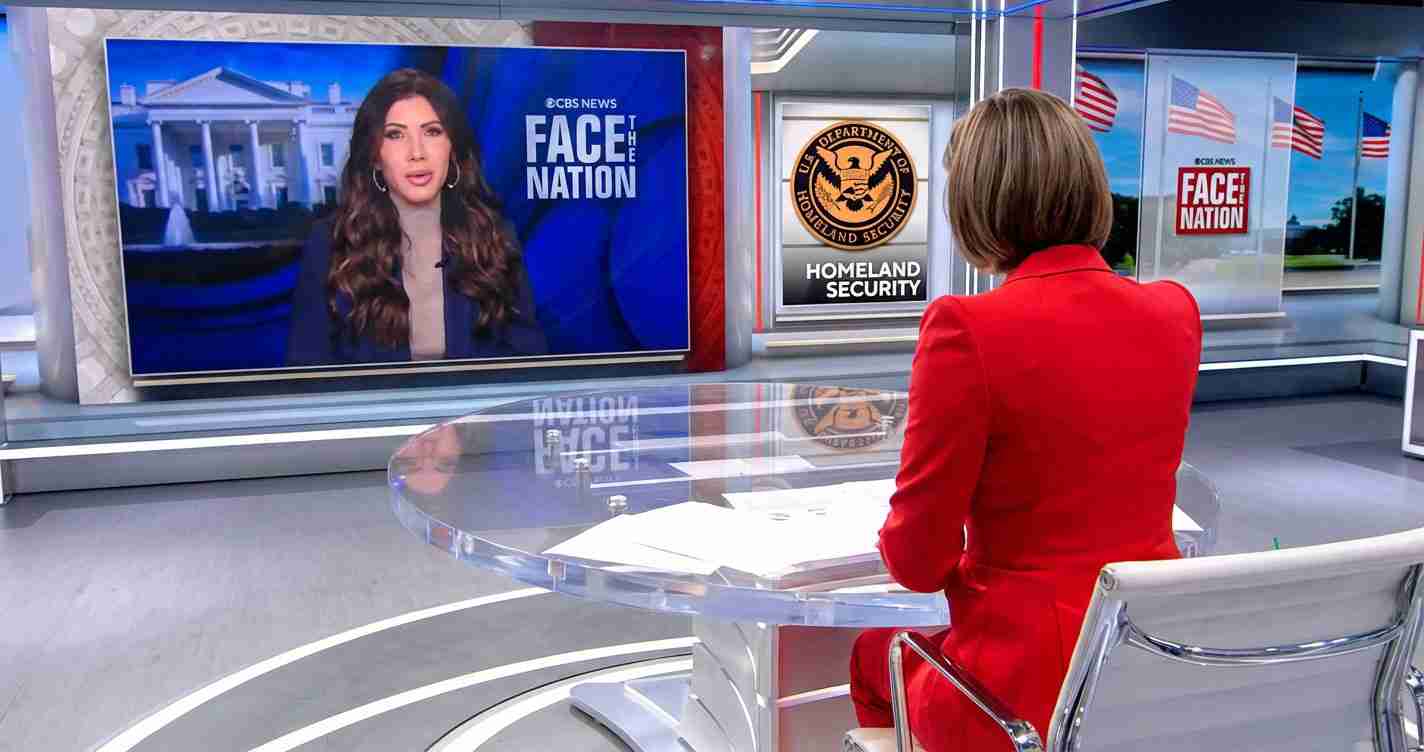
Noem Rebukes CBS’ Margaret Brennan for Naming ICE Agent in Renee Good Shooting; Warns Against Doxxing as Threats Rise
DHS Secretary Kristi Noem rebuked CBS’ Margaret Brennan for naming ICE agent Jonathan Ross in the Renee Good shooting, warning that public identification risks doxxing and a surge in death threats amid escalating debate over accountability and officer safety.
- Noem warned against public naming after CBS reporting identified the agent; she said naming officers can spur doxxing and threats (CBS News).
- Reporting cites agent injuries and treatment; federal sources told reporters he had internal bleeding but was treated and released the same day (CBS News).
- Video analyses and protests produced conflicting interpretations of the shooting and fueled demonstrations and public unrest (Wikipedia; ABC7 Chicago).
- Broader implications include debates on transparency, officer safety, policy responses and potential legal or legislative changes (Wikipedia).
What happened in the interview
During a Sunday interview, CBS anchor Margaret Brennan asked DHS Secretary Kristi Noem about the ICE agent involved in the Minneapolis shooting and whether he had returned to work. Brennan identified the agent as Jonathan Ross, citing reporting that he experienced internal bleeding but was released the same day. Noem interrupted, saying:
“Don’t say his name. I mean, for heaven’s sakes, we shouldn’t have people continue to dox law enforcement when they have an 8,000-percent increase in death threats against them.”
Brennan reiterated that no one condones violence against anyone and repeated reporting that the agent had been treated and released the same day, asking whether he had returned to duty. The exchange highlighted the friction between demands for public accountability and concerns about officer safety (CBS News).
Details of the Minneapolis shooting
Federal accounts and reporting say the confrontation occurred during ICE activity in Minneapolis on January 7, 2026. Renee Good, 37, a U.S. citizen, was shot multiple times—once through the windshield and twice through the driver’s window—after moving her vehicle on a one-way street where ICE agents were operating. Federal officials said the officer fired in self-defense after Good drove toward him; DHS characterized her actions as an attempt to run over agents and labeled the case “domestic terrorism.” Independent video analyses reported by major outlets indicated Good appeared to turn away and did not clearly show her vehicle striking the officer; analysts could not confirm that she hit him (Wikipedia).
Good received CPR eight minutes after the shooting and later died at Hennepin County Medical Center. Her dog was unharmed. These facts, and varying interpretations of available video, have been central to public debate and protests (CBS News; Wikipedia).
Agent injuries and status
Two U.S. officials told CBS News that the ICE agent—identified by reporters as Jonathan Ross—suffered internal bleeding to the torso, though the extent was unclear. DHS confirmed he was treated and released but provided limited details. Subsequent reporting indicates Ross has not returned to work and is being kept in a secure location amid threats; U.S. Border Patrol Commander Gregory Bovino said Ross faced “several threats against his life.” Ross has been described as a 10-year ICE veteran with a prior injury in June that required 33 stitches (CBS News).
Public reaction and protests
The shooting sparked protests and unrest in Minneapolis and beyond. Demonstrations ranged from large peaceful gatherings to clashes where law enforcement used tear gas. A January 17 protest at an ICE facility in Broadview, Illinois, attracted significant attention (ABC7 Chicago). Polling by Quinnipiac, reported via national outlets, found 53% of voters said the shooting was unjustified, signaling public skepticism about law enforcement actions in this case (ABC News poll).
Official responses and investigations
DHS described the incident as self-defense and announced related policy actions, including Operation Salvo to increase ICE presence in New York City, which drew bipartisan scrutiny. Minneapolis Mayor Jacob Frey, after reviewing video, publicly rejected DHS characterizations. Federal and local probes were opened into the shooting and surrounding conduct; Minnesota Gov. Tim Walz declared January 9 “Renee Good Day.” State and federal investigators have also examined whether public officials attempted to influence investigations (Wikipedia).
Questions about on-scene care
Reporting noted ICE agents receive CPR training but did not perform CPR on Good at the scene, prompting criticism and questions about immediate medical response during enforcement operations. That issue has become part of the broader accountability discussion (Minnesota Public Radio (CPR report)).
Doxxing, threats and free speech
Noem’s rebuke centered on doxxing—the public naming and targeting of officers—and a cited surge in threats. Her claim of an “8,000-percent increase” in death threats was voiced in the interview but not independently verified during the exchange. Advocates for transparency argue the public has a right to know who is involved in deadly encounters; supporters of law enforcement warn that naming officers can expose them and their families to harassment and real danger. Reporters and newsrooms face a fraught balance between public accountability and safety.
Broader political stakes
The case has national political implications, reshaping debate over federal immigration enforcement tactics and DHS’s role. President Trump and other federal leaders have used strong language and policy actions in response to unrest. Advocates on all sides are using the incident to push for changes in enforcement policy, transparency standards and protections for front-line agents (Wikipedia).
Implications for United States
Public safety: Continued threats against agents could cause agencies to limit public-facing roles, relocate personnel, or restrict identity disclosures, changing staffing and reporting practices (CBS News).
Press freedom: Newsrooms must weigh public interest in naming officers against safety risks; this case may lead outlets to refine naming policies.
Political and policy fallout: Protests, federal investigations and new ICE initiatives increase the chance of legislative responses on use-of-force, transparency and harassment protections (Wikipedia).
Community trust: Polling and protests show fractured trust; without clear answers on accountability and medical response, civic tensions may deepen (ABC7 Chicago; ABC News poll).
Legal precedents: How investigators handle evidence, video analysis and public communication will shape future cases and expectations for transparency while seeking to protect officers from baseless threats (CBS News; Minnesota Public Radio (wife’s statement)).
Reporting note and sources
This report is based on consolidated coverage and background including CBS News, compiled timelines and context from Wikipedia, local reporting from Minnesota Public Radio and related coverage of protests (ABC7 Chicago) and polling (ABC News poll).



