
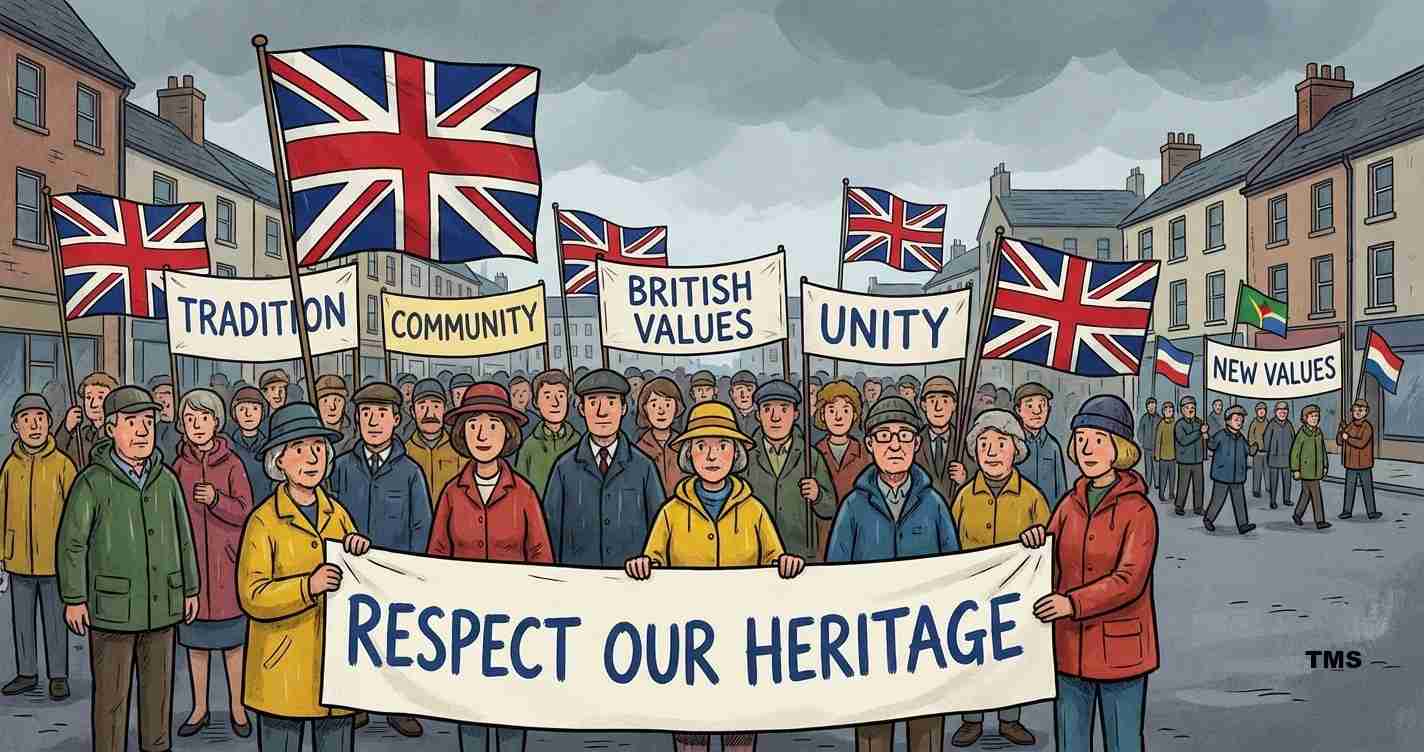
Britons Push Back on “Woke” Policies as Union Jack Campaigns and Foreign Banners Stoke Debate
Britain’s 2025 cultural debate sharpened as disputes over ‘woke’ policies, immigration and flag campaigns ignited protests, far-right mobilization and political realignment—revealing complex public opinion and transatlantic implications for security, trade and social cohesion and governance.
Key takeaways
- Public attitudes are mixed: National Centre for Social Research finds more socially liberal views overall, but sharp divides persist linked to Brexit voting.
- Street protests evolved: Anti-immigration demonstrations from April 2025 included peaceful gatherings and violent clashes, with organized far-right groups and flag campaigns shaping events (Wikipedia summary of the 2025 British anti-immigration protests).
- Mainstreaming of rhetoric: Some mainstream politicians echoed anti‑“woke” and anti‑immigration themes, a trend documented by Frontiers in Political Science as “centrist normalization.”
- Online escalation: Anti‑migrant language on platforms intensified in 2025, prompting scrutiny of misinformation and calls for faster platform action (Big Issue).
Key information and sources
This account draws on public research and reporting, including analysis by the National Centre for Social Research, compiled reports of protests (Wikipedia summary of the 2025 British anti-immigration protests), academic analysis from Frontiers in Political Science, and commentary on online rhetoric from the Big Issue.
Public opinion: not a simple anti‑woke sweep
Recent polling and academic work complicate the image of a nationwide, rolling backlash against “woke” culture. The National Centre for Social Research found that, on many culture‑war issues, Britain has shifted toward socially liberal attitudes — including on identity, equality and immigration. That shift is uneven, however, with Leave and Remain supporters from the 2016 Brexit referendum continuing to diverge sharply.
Sir John Curtice observed that growing acceptance of positions labeled “woke” does not automatically translate into political advantage for candidates who campaign against those ideas. Voter behavior remains complex and locally varied, and electoral effects depend on regional dynamics and issue salience.
Anti‑immigration protests and far‑right mobilization
From April 2025 a wave of anti‑immigration protests moved through towns from Waterlooville to Newcastle. While some demonstrations were peaceful, others turned violent; compiled reports indicate at least 41 police officers injured and more than 180 arrests in linked disturbances (Wikipedia summary of the 2025 British anti-immigration protests).
Local complaints about asylum accommodation often framed the initial disputes, but control of many demonstrations shifted toward organized far‑right groups. Groups such as Britain First, UKIP, the Homeland Party and Patriotic Alternative were active in protests and online networks; investigators noted that social media misinformation helped stoke anger and disorder.
Operation Raise the Colours urged supporters to fly the Union Jack and other banners outside council buildings and public spaces; parts of the campaign were later linked to broader networks pushing nationalist slogans.
The coordinated flag campaign Operation Raise the Colours circulated on messaging apps and social platforms, producing a visible display of national symbols in contested local debates.
Political mainstream adoption of anti‑woke rhetoric
What began in the streets found echoes in national politics. Reform UK and some Conservative politicians amplified messages that mixed nationalist language with criticism of immigration policy and “woke” cultural trends. Academic research in Frontiers in Political Science documents a pattern scholars call “centrist normalization,” where language once limited to fringe actors is absorbed by mainstream parties.
High‑profile figures voiced public sympathy for some protests — for example, Suella Braverman said she was “very proud” of those who protested asylum housing in Waterlooville. At the same time, party leaders cautioned against extremist elements and emphasized the need to prevent disorder (Wikipedia summary of the 2025 British anti-immigration protests).
Escalation and international involvement
Tensions rose further when Elon Musk addressed a Newcastle march by video link, warning of “massive uncontrolled migration” and saying violence was possible — a moment that underscored how international figures can influence national debates. The Metropolitan Police later moved to ban a UKIP march in Whitechapel, citing a “realistic prospect of serious disorder” in an area with a large Muslim population, and anti‑racist counter‑protests followed.
Rising anti‑migrant rhetoric online
Analysts reported that street protests were mirrored and amplified on social platforms. Media commentary summarized research showing anti‑migrant language grew more extreme in 2025, framing migration as an “invasion” and advocating “remigration.” Such rhetoric increasingly targeted non‑white communities, including long‑established British citizens, raising alarms about social cohesion and the risks of online amplification (Big Issue).
A police inspectorate review found misinformation and disinformation remained on networks for too long and helped fuel disorder in some towns, prompting calls for clearer platform rules and faster law enforcement responses (Wikipedia summary of the 2025 British anti-immigration protests).
Implications for the United States of America
Economic and political ties: Britain’s unrest matters to the U.S. as a close economic and security partner. Polarization and mainstreaming of hardline rhetoric can affect trade talks, investment decisions and joint migration and security policy (see analysis in Frontiers in Political Science).
Politics and public opinion: The adoption of anti‑woke and anti‑immigration language by mainstream parties in the U.K. may echo in U.S. political conversations; scholars warn that “centrist normalization” in one democracy can embolden actors elsewhere.
Security and law enforcement cooperation: Disorder and extremist networks strain police and intelligence resources shared by the U.S. and U.K.; cross‑border coordination will be important if far‑right groups expand transnational links (Wikipedia summary of the 2025 British anti-immigration protests, Big Issue).
Social cohesion and diaspora communities: Rising anti‑migrant rhetoric targeting South Asian, Black and Muslim communities can damage transatlantic ties, affect diaspora relations and complicate consular engagement.
Media and global narratives: International interventions by tech figures and transnational amplification of misinformation illustrate how global platforms can reshape local politics and democratic discourse (Frontiers in Political Science, Wikipedia summary of the 2025 British anti-immigration protests).
Reporting notes and sources
Key sources used in this account include:
- National Centre for Social Research: Woke attitudes now more common
- Wikipedia summary of the 2025 British anti-immigration protests
- Frontiers in Political Science: analysis of political shifts
- Big Issue: commentary on anti‑migrant rhetoric and online trends
Concluding observations
Flags, banners and rhetoric have become focal points for broader questions about identity, immigration and belonging in Britain. As 2025 progressed, officials, political leaders and communities faced the challenge of balancing the right to protest with protecting public order and social cohesion. Clearer rules on misinformation, rapid platform responses, and careful political leadership were widely recommended to reduce the risk of escalation and safeguard democratic debate.



