Rare reawakening of Echinus Geyser in Yellowstone draws attention as scientists point to ‘clogged’ hydrothermal plumbing
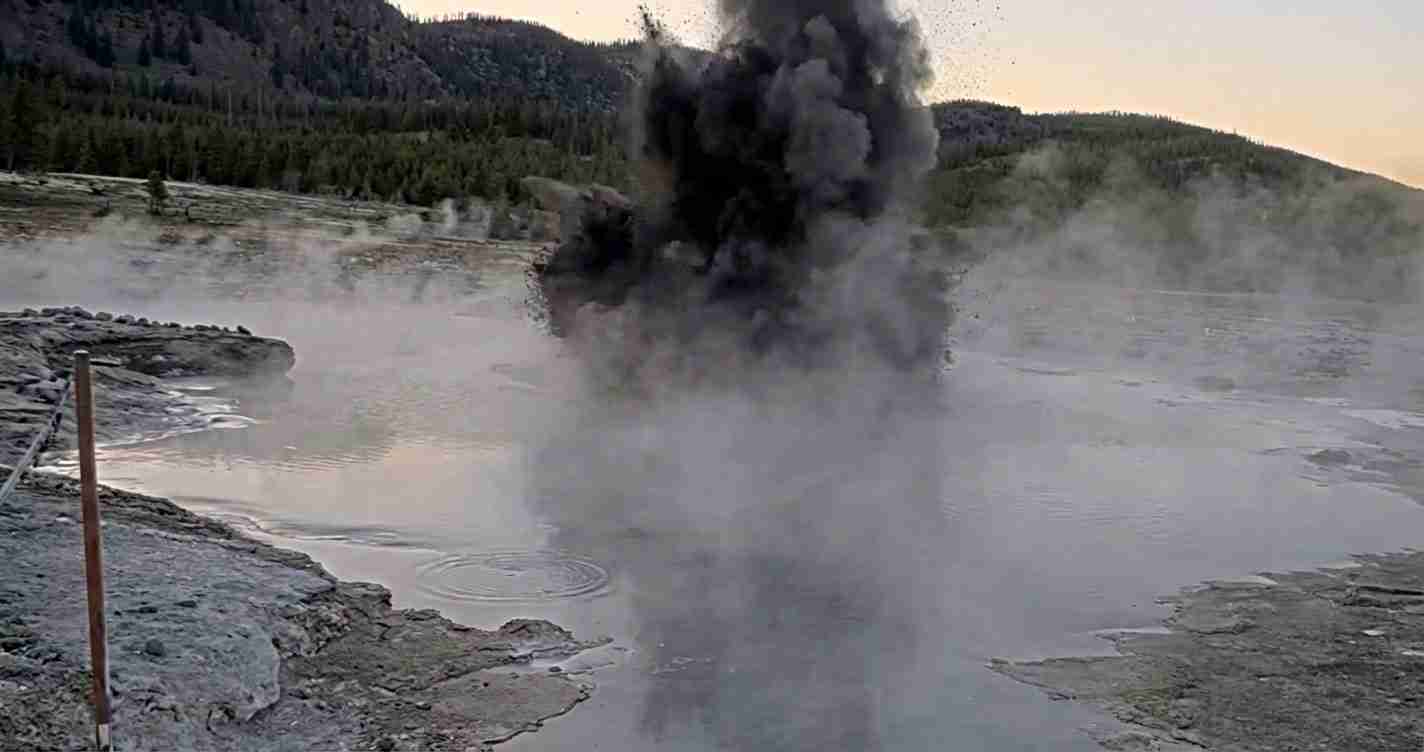
Echinus Geyser in Yellowstone’s Norris Geyser Basin unexpectedly reawakened in February 2026 after nearly six years, erupting about 40 times with acidic jets 20–30 feet high and prompting close scientific study and renewed public interest.
- About 40 eruptions were logged in February 2026, with typical blasts 20–30 feet (6–10 m) high and 2–3 minutes long.
- Scientists attribute the return to clearing of a “clogged” hydrothermal plumbing system, not increased volcanic unrest.
- Echinus is strongly acidic: its 66-foot-wide pool has a pH near 3.3–3.6 and temperatures up to 176.5°F (80.3°C).
- Park monitoring continues; activity tapered by Feb. 24 and, as of early March 2026, the geyser had not erupted again.
Echinus’s February comeback: what happened
Steam and acidic water jets from Echinus Geyser resumed in early February 2026 after nearly six years of dormancy. Observers logged the first burst on Feb. 7, with intermittent activity on Feb. 9, 12 and 15, and a notable intensification starting Feb. 16 when eruptions occurred roughly every two to five hours, according to the U.S. Geological Survey and contemporary media coverage including ABC News.
Over February the geyser produced roughly 40 eruptions; most jets reached about 20–30 feet (6–10 meters) and lasted two to three minutes. After each blast the pool level fell sharply and typically refilled over roughly an hour — behavior similar to a brief active phase in 2017–2019 (NDTV; CBS News).
Why Echinus is special
Echinus stands out because of its acidity. The geyser’s 66-foot-wide pool has a pH of about 3.3–3.6 — roughly the acidity of vinegar — and temperatures up to 176.5°F (80.3°C). Park scientists explain that the acidity comes from acidic gases mixing with otherwise neutral waters rather than corrosive, rock-dissolving fluids, a distinction that helps the geyser’s plumbing persist (USGS; ABC News).
Mineral deposits form spiny, sea‑urchin-like cones — the source of the name given by mineralogist Albert Charles Peale in the late 1800s — and vivid red borders of iron, aluminum and arsenic rim the pool, creating a visually striking landscape (CBS News; NDTV).
History and pattern of activity
Past behavior: Echinus was once a frequent performer — in the 1970s it erupted every 40–80 minutes and later produced higher, sometimes horizontal blasts, with some historical eruptions reportedly reaching 75 feet. Activity declined after 1998 when a secondary water source changed or dried; short revivals occurred in 2010–2011 (about 15 eruptions) and during 2017–2019 (NDTV; CBS News).
What scientists say about the cause
Researchers monitoring Norris Geyser Basin point to a physical, local cause: mineral buildup and shifting flows can “clog” hydrothermal channels, and the February 2026 activity fits the pattern of a previously clogged system clearing and allowing steam and water to pass through the geyser’s plumbing again. Scientists emphasize this is a basin-scale hydrothermal change, not an indicator of increased volcanic unrest. The USGS and a Yellowstone Volcano Observatory briefing (video) note background-level seismicity — 74 small earthquakes in February (maximum M2.4) — with no signs of magma-system changes.
Park monitoring and current status
Norris is Yellowstone’s hottest and most dynamic thermal area, and park managers along with USGS scientists maintain close monitoring. The February surge peaked mid-month and tapered; by Feb. 24 activity had subsided and, as of early March 2026, Echinus had not erupted again. Instruments and temperature arrays remain in place to detect renewed phases; the USGS notes geyser-active episodes often last one to two months, so a long summer run is unlikely but not impossible (NDTV; USGS).
Public access and safety
Boardwalks and viewing platforms provide relatively close views of Echinus, but thermal areas are hazardous. Acidic water and thin crust can cause severe injury. During active periods park staff increase signage and presence to keep visitors on established trails and platforms (CBS News; NDTV).
Context within broader Norris activity
Echinus’s reactivation occurred amid other local hydrothermal changes in Norris, including a new blue hot spring formed by small explosions in late 2024–early 2025 and Steamboat Geyser’s eruption on Feb. 27. Scientists interpret these features as local shifts in flow and pressure rather than evidence of broader volcanic unrest (YVO briefing; USGS).
Implications for the United States
Economic impact
Yellowstone drives regional tourism across Montana, Wyoming and Idaho. A high-profile return of Echinus can boost visitor interest and short-term attendance, translating into hotel stays, restaurant business and local tax revenue that benefit rural economies and support park infrastructure and trail maintenance (CBS News; ABC News).
Political consequences
The episode underlines the importance of federal stewardship. For policymakers it reinforces arguments for sustained funding of the National Park Service and scientific monitoring by agencies such as the USGS, informing debates over resource allocation for visitor safety, research equipment and rural infrastructure that supports tourism.
Social effects
Echinus provides educational and outreach opportunities for schools and community groups; interpretive programs can use episodes like this to teach geology, chemistry and stewardship. At the same time, visitation surges can strain local services and necessitate careful crowd management to protect visitors and fragile thermal features (NDTV).
Cultural relevance
Yellowstone’s thermal features are part of the nation’s natural heritage. The return of a rare acidic geyser like Echinus reinforces the value of preserving public lands for future generations and highlights the cultural importance of natural wonders in American identity and recreation (CBS News).
Practical applications for residents and visitors
- Check official updates: Travelers should consult the National Park Service and park alerts before visiting and always follow boardwalk rules and posted warnings.
- Prepare businesses: Local hotels, restaurants and emergency services can coordinate staffing and logistics to accommodate visitor surges while maintaining safety.
- Support monitoring: Policymakers can target funding for monitoring equipment, interpretive staff and infrastructure that balance access with preservation (NDTV).
Reporting and sources
This report draws on direct monitoring updates and analysis from the USGS / Yellowstone Volcano Observatory, along with contemporary reporting from ABC News, CBS News and an international feature in NDTV. A Yellowstone-related video briefing is available from the Yellowstone Volcano Observatory.
“The Echinus episode is best explained by hydrothermal plumbing changes rather than volcanic unrest,” according to USGS monitoring updates.