Resilient pair: Big Bear bald eagles Jackie and Shadow lay third egg after ravens destroyed first clutch
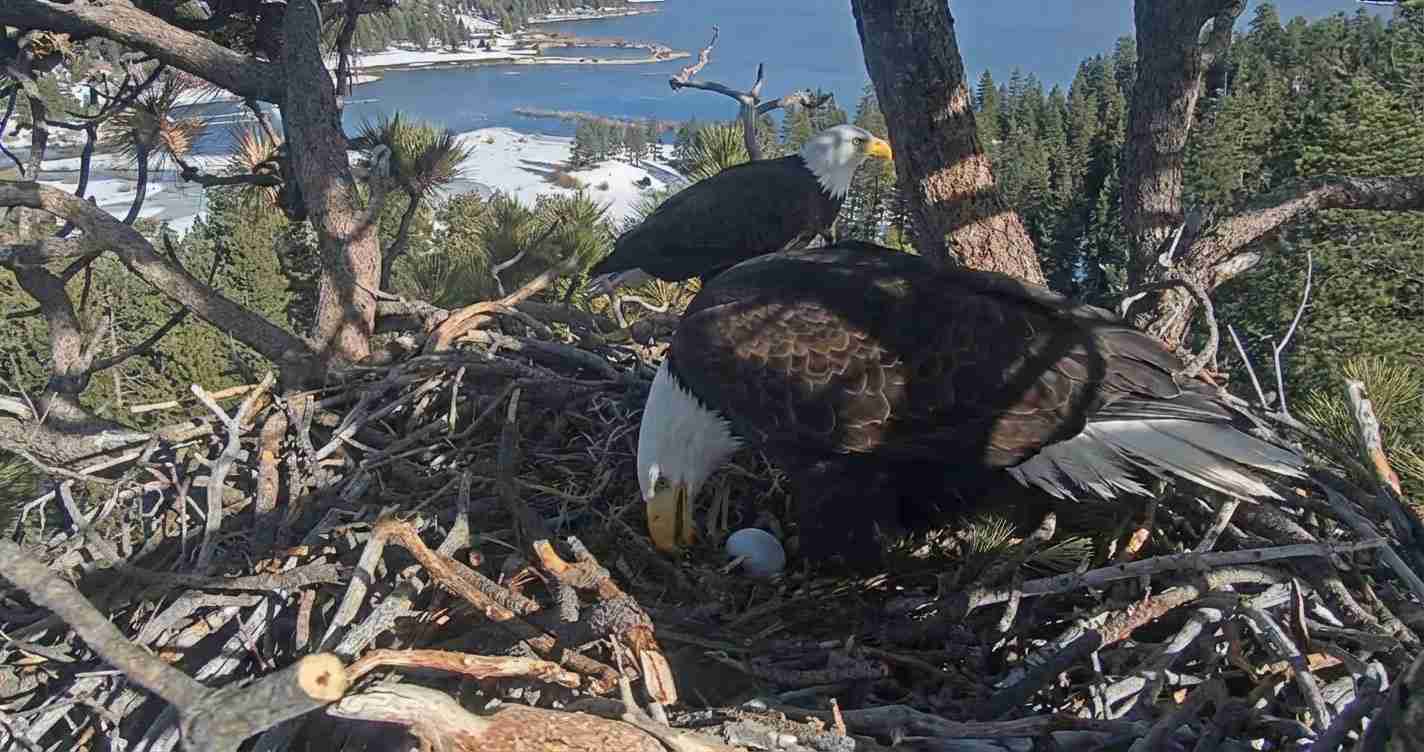
Big Bear Lake’s resident bald eagles, Jackie and Shadow, laid a third egg on Feb. 24, 2026, filmed live on the Friends of Big Bear Valley nest cam — a hopeful rebound after ravens destroyed two eggs in January.
Key takeaways
- Third egg laid: Jackie laid a new egg about 2:30 p.m. on Feb. 24 while viewers watched the live feed (CBS Los Angeles coverage of Feb. 24 egg).
- Earlier loss: Two eggs laid Jan. 23 and Jan. 26 were destroyed by ravens on Jan. 30 when adults were away.
- Experienced pair: Jackie (hatched ~2012) and Shadow (hatched ~2014) have nested above Big Bear Lake for years and helped raise eaglets in 2019, 2022 and 2025.
- Watch and follow: Friends of Big Bear Valley’s live cam and recaps provide 24/7 monitoring and community engagement (Friends of Big Bear Valley nest cam and recaps).
Main story
The moment on camera
At about 2:30 p.m. on Feb. 24, the Big Bear Lake eagle cam showed Jackie producing a new egg. Viewers saw Jackie rise, inspect the egg, rearrange nesting material and settle back to incubate. Shadow returned minutes later as the valley warmed and snow melted.
“Jackie did a great job and she is now resting,” Friends of Big Bear Valley posted, noting it was unclear whether more eggs would follow this season.
The live feed is maintained by Friends of Big Bear Valley; the group posts recaps and commentary and provides a global audience real-time access to nesting behavior. See the live-cam recaps and footage on the FOBBV channel for the Feb. events and behavior highlights (FOBBV video recap (Feb. events), FOBBV field observations and behaviors).
A history of highs and setbacks
Big Bear’s first recorded bald eagle chick hatched in 2012 and fledged successfully. Since then, roughly a dozen eggs have been laid at the site, but only a fraction have hatched and survived to adulthood. Conservationists estimate about half of eaglets survive to maturity, underscoring the fragility of nesting success.
Jackie (estimated hatch ~2012; resident since 2016) and Shadow (estimated hatch ~2014; present since 2018) have become familiar to a worldwide audience via the Big Bear Eagle Cam, which documents mating, nest repairs and both triumphs and losses.
January losses and renewed courtship
The 2026 season turned dramatic after eggs laid Jan. 23 and Jan. 26 were broken by ravens on Jan. 30 while the adult eagles were away. Footage of the attack circulated online and drew global sympathy. In mid-February the pair renewed courtship behaviors — Jackie bringing sticks and flattening the nest — signs of preparing a second clutch.
Biology of the nest: timing and risks
Bald eagle eggs typically incubate for about 35 days. Pairs often lay eggs several days apart (three days is common), so another egg could appear soon if Jackie lays again. Incubation duties are shared, but absences for feeding or stretching wings increase vulnerability to opportunistic predators such as ravens.
Wildlife scientists note raven predation is a documented threat across the West, influenced by food availability, altered landscapes and predator population dynamics. Persistent monitoring and habitat measures can reduce risk, but predation remains an unpredictable factor in nesting success.
Community and the Eagle Cam
Friends of Big Bear Valley (FOBBV) operates the Big Bear Eagle Cam and maintains a large online following across YouTube, Facebook, Instagram and TikTok. The live cam has turned Jackie and Shadow into a shared public story — fans celebrate fledging milestones, exchange observations and sometimes grieve losses together.
FOBBV engages volunteers who monitor the feed, post live recaps, and help preserve the nesting site. The project has also honored local leaders such as Sandy Steers, an activist who helped launch the cam project.
Conservation and management questions
The Jan. 30 losses raise management questions: how to reduce egg losses from ravens without harming non-target wildlife, and how to balance volunteer roles with agency responsibilities. Common community-led approaches include habitat protection, buffer zones around nests during breeding season, public education, and limiting human attractants that support raven populations.
Experts emphasize that a single breeding pair like Jackie and Shadow has outsized conservation and public-engagement value; policies must weigh eagle protection, respectful public access, and the practical limits of wildlife management in mixed-use landscapes.
Implications beyond Big Bear
Economic: The Big Bear Eagle Cam draws thousands of viewers worldwide and supports local businesses and tourism in the San Bernardino Mountains. A successful nesting season can boost off-season visitation and donations to conservation groups.
Political & policy: The case highlights intersections of federal protections and local action. Bald eagles benefit from federal law, but effective nest protection commonly depends on local volunteers, landowners and non-profits such as FOBBV.
Social & cultural: Jackie and Shadow’s visibility fosters bipartisan interest in conservation, builds local pride, and serves as a living classroom about species recovery and stewardship.
Practical applications for residents
- Support local non-profits and nest-monitoring initiatives.
- Obey posted buffers and avoid feeding wildlife.
- Landowners: preserve large shoreline trees and minimize disruptive activities during nesting season.
- Visitors: enjoy the view responsibly, maintain distance, and report disturbances to wildlife agencies.
Sources and live feeds
- CBS Los Angeles coverage of Feb. 24 egg
- Friends of Big Bear Valley nest cam and recaps
- FOBBV video recap (Feb. events)
- FOBBV field observations and behaviors
Ongoing monitoring by Friends of Big Bear Valley will determine whether Jackie lays further eggs this season and how the pair fares through incubation. The new egg offers hope, and the nest cam will let viewers across the nation and around the world follow each step as it unfolds.