Newsom’s high-speed rail humiliation deepens as aide admits blunder and $126B price tag leaves project stranded
California’s high-speed rail project, approved in 2008 to link San Francisco and Los Angeles, has stalled amid massive delays, a projected $126 billion price tag, federal funding cuts and criticism that the plan remains an unfinished skeleton.
Key takeaways
- Cost shock: Latest estimates put completion of a San Francisco–Los Angeles system at about $126 billion, far above the $33 billion voters saw in 2008.
- Limited construction: Only a Central Valley segment between Merced and Bakersfield has sustained ground work; no continuous intercity track yet exists.
- Political fallout: Critics cite mismanagement and federal exposure; defenders point to jobs and long-term benefits as justification for continued funding efforts.
Overview
The ambitious 2008 plan to connect California’s largest metro areas by high-speed rail has instead become a contentious, costly and politically charged effort. Official estimates and reporting now place the cost to complete the full San Francisco–Los Angeles system at roughly $126 billion. The project’s status has prompted scrutiny from watchdogs, lawmakers and national media.
Background and timeline
Voters approved the original plan in 2008 with a projected price near $33 billion and promises of under-three-hour travel times. Over time the project’s scope changed, timelines slipped, and cost estimates climbed. In 2019, Governor Gavin Newsom acknowledged there was “simply isn’t a path from San Francisco to LA” under prior assumptions and shifted immediate focus to the Central Valley.
Cost and funding: the $126 billion gap
Officials now estimate completion of the San Francisco–Los Angeles system at about $126 billion, leaving an estimated shortfall near $90 billion. Project managers maintain they can close the gap but concede most funds are not secured. Federal aid has been inconsistent: initial grants were followed by redirections and cuts amid heightened scrutiny.
A national broadcast compared the program’s projected outlays to historic federal rail funding, noting the $126 billion figure would exceed total Amtrak appropriations since the 1970s — a comparison opponents have used to question the project’s value (see 60 Minutes/CBS News).
Project status: a Central Valley skeleton
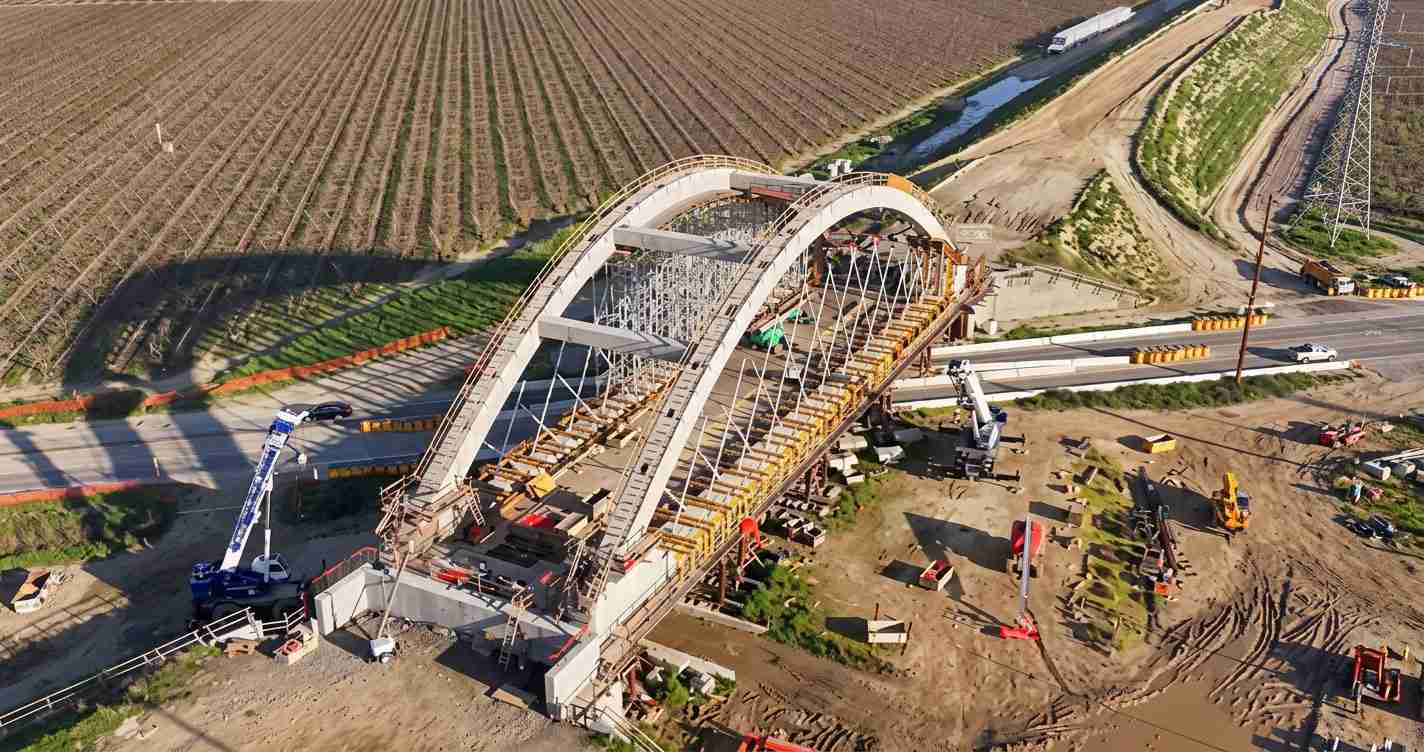
On the ground the most visible work is a patchwork of concrete foundations, grade separations and a Central Valley corridor from Merced to Bakersfield. Workers have completed foundations and viaducts in places like Fresno, but long stretches remain unfinished or unstarted, awaiting funding, environmental clearance or right-of-way acquisition.
Project managers now project the earliest full-service opening for even a scaled system around 2033, contingent on securing tens of billions more in funding (see California High-Speed Rail Authority).
Political fallout and criticism
Republican critics and some conservatives have seized on cost overruns and delays as emblematic of government waste. Representative Vince Fong called the program “a complete bait and switch,” and other opponents label it the “quintessential example of government waste and mismanagement.”
Supporters argue the Central Valley work produces jobs and economic activity, and that long-term benefits — including reduced emissions and expanded mobility — justify phased investment and alternative financing.
Local reaction: “Stonehenge” and skepticism
In Fresno and other Valley towns, unfinished concrete spires have been derisively nicknamed “Stonehenge”, reflecting frustration that visible progress has not produced usable service. Business owners and farmers cite disruptions from construction with limited near-term local ridership prospects for a system many view as primarily benefiting coastal urban centers.
Project defenders counter that the heavy civil work is necessary groundwork and that construction provides tangible employment and stimulus while broader connections are phased in.
Accountability: admissions and audits
California Transportation Secretary Toks Omishakin acknowledged planning and communication errors, calling some criticism “very fair” and admitting the state underestimated the scope and cost. Independent audits, federal reviewers and watchdog groups have raised concerns about governance, oversight and forecasting, pressing for greater transparency before additional funds are committed.
“Some criticism is very fair,” Secretary Omishakin said, acknowledging mistakes in early planning and cost assumptions.
Implications for the United States
Economic impact: The project’s ballooning costs could influence federal grant decisions nationwide if California seeks tens of billions more in federal support. Lawmakers will weigh this project against other infrastructure priorities.
Political consequences: The saga reinforces skepticism about large centralized projects for many moderates and conservatives, potentially shaping debates on federal oversight and appropriations (see statements from critics like Representative Vince Fong).
Social and cultural effects: Communities face prolonged disruption with limited near-term benefits, while the Stonehenge imagery has become a potent shorthand for perceived government waste in political messaging and media coverage.
Sources and further reading
- California High-Speed Rail Authority — Official site, project status and documents
- California Department of Transportation (Caltrans) / California Transportation Agency — statements and press releases
- Office of U.S. Representative Vince Fong — statements and press releases
- CBS News — 60 Minutes — national coverage and comparisons
- Office of the Governor of California — public statements and policy releases
Reporting by Times Media Service; on-the-ground reporting and review of public records and official statements.