Tiny blue octopus from Galápagos named Microeledone galapagensis after deep‑sea discovery off Ecuador
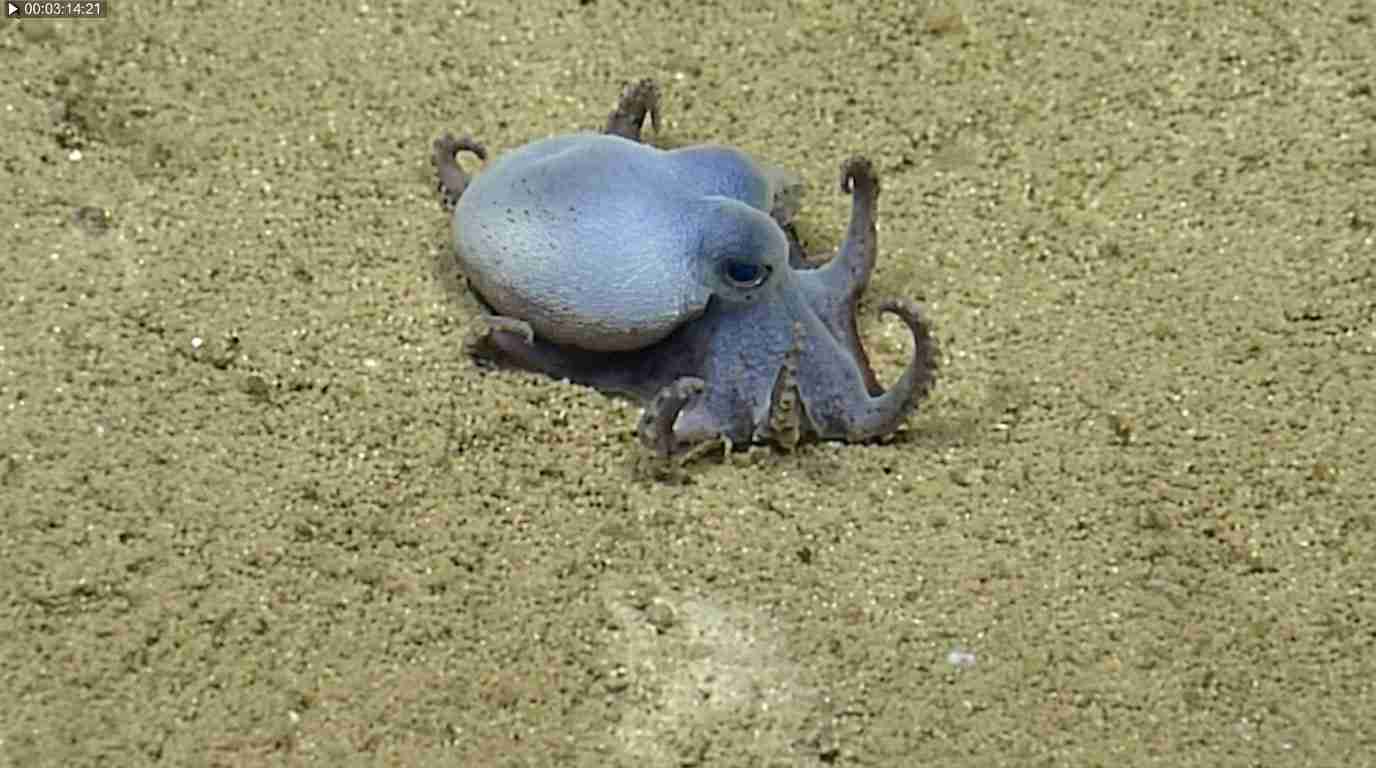
Scientists have named Microeledone galapagensis, a tiny pale‑blue benthic octopus discovered off the Galápagos in 2015. Micro‑CT imaging of ROV‑collected specimens at the Field Museum enabled non‑destructive internal study and formal publication.
- New species: Microeledone galapagensis — a small, pale‑blue benthic octopus from ~5,800 ft (≈1,770 m).
- Key methods: ROV collection plus non‑destructive micro‑CT 3D imaging to reveal internal anatomy.
- Specimens curated at: Charles Darwin Research Station; scans at the Field Museum.
- Significance: Highlights deep‑sea biodiversity and the value of advanced imaging for taxonomy.
Discovery and collection
Where and when: Remotely operated vehicle (ROV) footage from a 2015 deep‑sea expedition showed small pale‑blue octopuses crawling across a sandy seafloor near the Galápagos Islands at roughly 5,800 feet (≈1,770 meters).
Scientists used the ROV’s collection tools to recover dozens of specimens and brought them to the surface for study. The animals were transferred to the Charles Darwin Research Station in the Galápagos for initial curation and assessment.
“This discovery highlights the vast, unexplored biodiversity of the deep ocean.”
Why experts hesitated to name it right away
Initial attempts relied on external traits — body shape, arm proportions and sucker patterns — but the specimens did not match known species in taxonomic keys or museum collections. Because of that uncertainty the material was sent to cephalopod specialist Janet Voight for deeper analysis at the Field Museum.
Micro‑CT scanning: seeing inside without cutting
At the Field Museum researchers used micro‑computed tomography (micro‑CT) in the museum’s X‑ray lab to produce high‑resolution 3D images of internal anatomy. These scans revealed fine soft‑tissue detail — mouth and beak, reproductive structures, cartilaginous and muscular elements — without dissecting fragile deep‑sea specimens.
For rare or delicate animals from the bathyal zone, micro‑CT preserves the physical specimen while delivering the anatomical data needed for rigorous taxonomic comparison.
How imaging enabled the new species declaration
Cephalopod taxonomy often depends on subtle internal traits such as the arrangement of reproductive organs, beak and radula characteristics, and internal cartilages. The micro‑CT datasets allowed Voight and collaborators to compare these internal features with known octopus groups and conclude the Galápagos specimens did not match any described species. Combined with external differences, that evidence supported the formal description of a species new to science.
Formal description and name
Based on the morphological and internal‑anatomy evidence, the team formally described the animal as Microeledone galapagensis. The genus name reflects the animal’s small size and resemblance to eledone‑type benthic octopuses; the species name galapagensis denotes its origin in the Galápagos region. The discovery was publicized via a peer‑reviewed report summarized on EurekAlert.
What the animal looks like and how it lives
The newly named octopus is tiny and pale blue, a coloration that contrasts with the deep‑sea sand where it was filmed. Observations indicate a benthic lifestyle — crawling or walking along the seafloor rather than swimming in open water. It was collected at about 5,800 feet, meaning it lives in cold, high‑pressure, low‑light bathyal conditions. Detailed data on diet, reproduction and full geographic range remain limited and will require further research.
Scientific importance of the find
Microeledone galapagensis joins a growing list of poorly known deep‑sea cephalopods. Each new species from the deep sea fills gaps in our understanding of life in high‑pressure, low‑light habitats. The discovery also highlights two modern trends in marine science:
- ROV exploration: enables near‑continuous access to otherwise inaccessible seafloor habitats.
- Advanced imaging: micro‑CT and related techniques transform taxonomy by enabling non‑destructive internal examination and easy sharing of 3D datasets.
Relation to Galápagos and Ecuadorian biodiversity
The Galápagos are renowned for distinctive terrestrial and shallow‑water life; this octopus extends that uniqueness into the deep sea around the islands. The find suggests seafloor habitats near oceanic islands and seamounts may host many undescribed species. Similar recent discoveries in Ecuador include new frogs and tiny plant species, underscoring the country’s role as a biodiversity hotspot. Examples and background are provided by Wayfairer Travel, Aurora Expeditions, and a Pensoft blog.
Implications for the United States
Although the species was found off Ecuador, the discovery carries lessons relevant to U.S. science, policy and industry:
Scientific and technological leadership
The find underscores the value of ROVs, deep‑sea platforms and advanced imaging (like micro‑CT). Continued U.S. investment in ocean robotics, museum imaging labs and research infrastructure helps keep American science at the leading edge.
Economic and research opportunity
New species create opportunities for U.S. universities, institutions and private industry to collaborate on follow‑up biological studies and technology development — supporting STEM jobs and partnerships with international stations such as the Charles Darwin Research Station.
Conservation and fisheries management
Accurate baseline inventories are essential as interest in deep‑sea mining and expanded fishing grows. Knowing what lives on the seafloor helps avoid unintended harm to rare or endemic species and supports precautionary resource decisions.
Education and public support for science
Findings like Microeledone galapagensis offer strong public narratives for museums, outreach and schools, reinforcing the returns of funding science and research infrastructure.
National security and maritime domain awareness
Better maps and biological knowledge of deep seafloor environments contribute to broader maritime awareness with implications for naval operations, undersea infrastructure maintenance and environmental monitoring.
Cultural and community ties
For coastal communities and sea enthusiasts, the discovery is a reminder of the ocean’s mystery and the practical benefits of responsible exploration and conservation.
Attribution and sources
This article summarizes findings presented in a peer‑reviewed description publicized via EurekAlert and the Field Museum‘s research communications, and it references the Charles Darwin Research Station where specimens were curated. Additional contextual sources on Ecuador’s biodiversity include Wayfairer Travel, Aurora Expeditions, and a Pensoft blog.
For more information and the original press materials, see: EurekAlert, Field Museum, and Charles Darwin Research Station.