Giant yellow cedar protected on paper but cut down on Vancouver Island, raising questions about enforcement
A giant yellow cedar protected under BC law was cut down on Vancouver Island, prompting a ministry probe after an advocate found the stump and raising concerns about a self-reporting system that may leave old-growth at risk.
- Protected tree: The felled yellow cedar measured 2.79 m (9.15 ft) DBH, above the regulation threshold for protection.
- Reporting gap: The Special Tree Protection Regulation relies on industry to report specified trees; the operator did not report this one.
- Investigation: The BC Forests Ministry opened an investigation after advocate Joshua Wright filed a complaint.
- Systemic concern: Changes to thresholds, exemptions and reliance on self-reporting are cited as weakening protections for ancient trees.
What happened
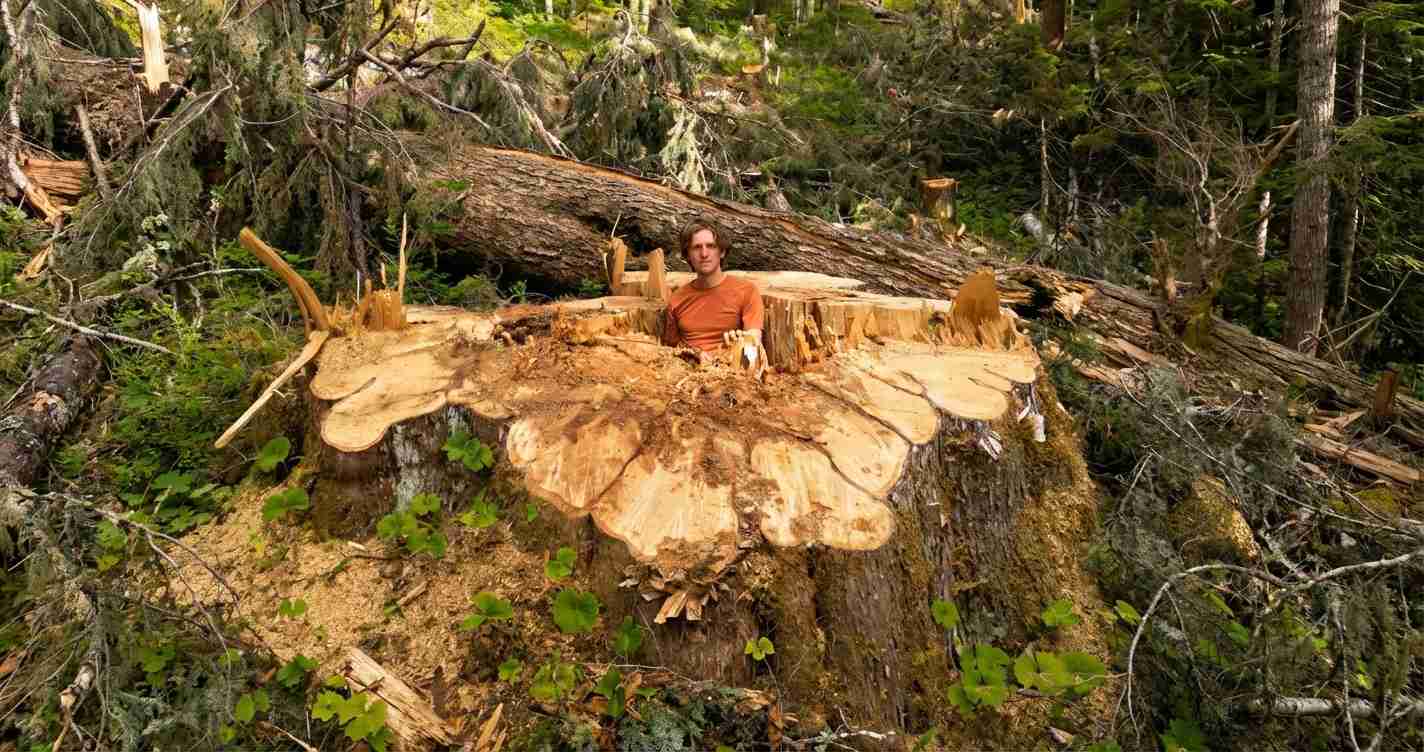
Location: Vancouver Island, British Columbia. Tree: a giant yellow cedar measured at 2.79 meters (9.15 feet) DBH, exceeding the size threshold that would list it as a protected “specified tree.”
The tree was cut during a logging operation and later discovered as a stump by tree advocate Joshua Wright, who filed a complaint that prompted the BC Forests Ministry to open an investigation. Coverage of the discovery and the ministry response is detailed by Town and Country Today.
“The incident highlights potential weaknesses in the province’s system for safeguarding old-growth trees.”
How the law is supposed to protect big trees
British Columbia’s Special Tree Protection Regulation lists “specified trees” by species, location and minimum diameter at breast height (DBH). The rule aims to keep truly large, old trees out of routine logging on Crown land and some private land under Forest Act agreements. The regulation defines DBH as the diameter measured at 1.3 meters above the higher of the tree’s high side or germination point. (See BC laws.)
For yellow cedar, the threshold in certain areas is set at about 2.65 m (8.69 ft) DBH. Trees meeting or exceeding that size are listed for protection unless a ministerial exemption applies. The Vancouver Island tree measured 2.79 m, placing it above the specified threshold.
Reporting and enforcement: a system that relies on industry
A major shortcoming critics identify is that the regulation depends heavily on logging companies and licence holders—referred to as responsible persons—to identify and notify the minister if they become aware a specified tree is present. That notification window can be up to 30 days after awareness in some cases, and exemptions exist for safety, road work or other minister-authorized activities. (See BC laws.)
Because the system depends on self-reporting, trees can be felled without the ministry being alerted if an operator does not disclose them. That appears to be the mechanism in this Vancouver Island case: the operator did not report the specified tree, it was cut, and the ministry only learned after a complaint by Joshua Wright. The ministry has not published a detailed public finding as of the latest reporting. (See reporting at Town and Country Today.)
A changing regulatory landscape
Observers note that provincial protections have changed in recent years. Prior to July 2019 there were no mandatory size-based protections on Crown land. Initial standards introduced in 2019 were repealed in September 2020 and replaced with higher size thresholds that, in some regions, protect fewer trees and species. Critics argue these changes reduced protection for ancient trees and were implemented with limited public explanation. (Analysis by BC Tree Hunter.)
The regulation also provides for buffers—trees within roughly 56 meters of a specified tree can be protected—but exemptions can erode those safeguards, leaving ecologically linked groups vulnerable when a specified tree is missed.
Why size thresholds are not a perfect measure of age or value
A numeric DBH threshold (for example, 2.65 m for yellow cedar) corresponds to a very large tree but is not a universal proxy for age. Yellow cedar in slow-growth or high-elevation settings can be centuries old while remaining narrower than the threshold. Critics say DBH-only rules miss many ancient trees with high ecological and cultural value, leaving them outside statutory protection. (See discussion at BC Tree Hunter.)
Local rules won’t cover this case
Municipal bylaws, such as Vancouver’s urban tree bylaw that protects trees 20 cm DBH and larger, apply to private urban trees but not to remote forest lands or this Vancouver Island cutblock. The felled cedar stood on land governed by provincial forest practice rules rather than municipal bylaws. (See Vancouver city bylaws.)
Accountability and what the ministry is doing
The BC Forests Ministry confirmed it opened an investigation after the complaint from Joshua Wright. Public records on this specific inquiry are limited and the ministry had not released a detailed public finding at the time of reporting. Conservation advocates are calling for clearer audits, stronger enforcement and proactive identification of specified trees before felling operations proceed. (Reporting summarized by Town and Country Today.)
Implications for the United States
Economic: Cross-border timber markets pay attention to BC policy; weak enforcement or reputational damage can affect buyer preferences and trade discussions. U.S. timber firms may study the case for lessons on monitoring and verification, and certification schemes (FSC, SFI) could be emphasized to reassure buyers.
Political: State lawmakers in U.S. timber-producing regions might use this example to argue for stronger on-the-ground enforcement rather than reliance on operator reporting; regulatory credibility is at stake.
Social & cultural: Rural communities dependent on logging may fear job impacts from stricter rules, while conservationists and Indigenous groups emphasize protection of culturally and ecologically significant trees—tensions reflected in U.S. debates as well.
Practical steps for U.S. policymakers/industry:
- Increase independent audits and random government inspections instead of pure self-reporting.
- Use mapping, satellite imagery and lidar to detect large trees before harvest.
- Align market incentives toward verified sustainable sourcing to reduce missed protections.
Sources and further reading
Primary regulation: British Columbia Special Tree Protection Regulation (complete text).
Coverage of the Vancouver Island felling and ministry investigation: Town and Country Today.
Analysis of protection changes and implications: BC Tree Hunter.
Municipal reference (urban tree bylaw): Vancouver city bylaws.
Reporting by Times Media Service.