Greta Thunberg Fined, Banned After Extinction Rebellion Dyes Venice’s Grand Canal Green in Protest Over COP30 Fossil Fuels Outcome
Greta Thunberg and Extinction Rebellion Italy dyed Venice’s Grand Canal green in a coordinated protest across ten Italian cities to denounce COP30’s failure to secure binding fossil fuel phase-out commitments; participants were fined and briefly banned from Venice.
Key takeaways
- Who: Greta Thunberg and 35 Extinction Rebellion activists (three foreign nationals among them) — fined €150 each and given 48‑hour bans from Venice. Sources: The Independent, Wanted in Milan.
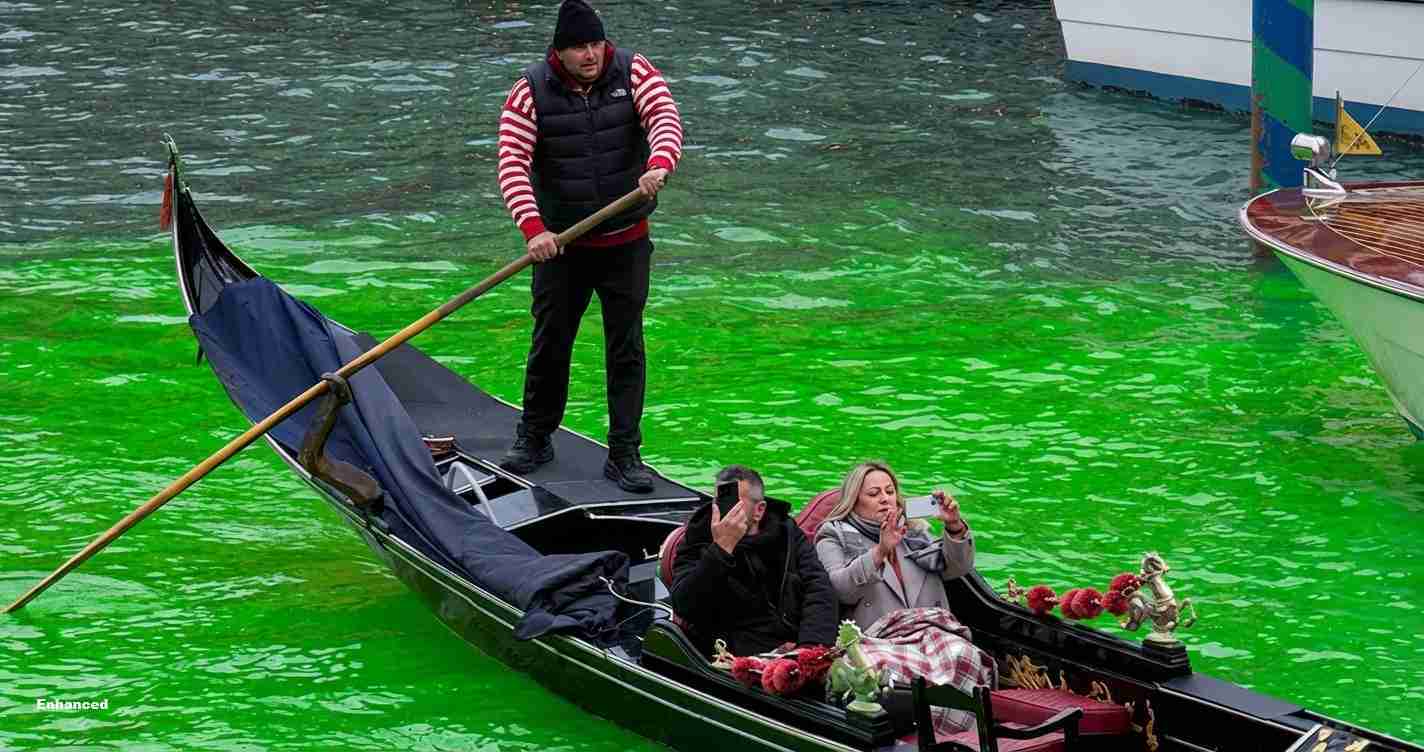
- What: Biodegradable green dye released into Venice’s Grand Canal, with matching actions in nine other Italian cities and a “Stop Ecocide” banner from the Rialto Bridge. Sources: EuroWeekly News, France24, RFI.
- Why: Protesters decried COP30’s lack of legally binding language to phase out fossil fuels and sought visual pressure on policymakers. Sources: Illuminem, EuroWeekly News.
What happened in Venice
Morning action: Activists, many dressed in red and some with veiled faces, staged a symbolic “funeral for the planet” along the Grand Canal. A group released a bright, biodegradable green dye into the water while others unfurled a large “Stop Ecocide” banner from the Rialto Bridge to maximize visibility for tourists and residents. Sources include EuroWeekly News, France24, and RFI.
Participants and penalties: Reports indicate 36 people were involved, including Greta Thunberg. Authorities issued fines of €150 per person and imposed 48‑hour bans on entering Venice, aiming to deter similar flash actions. Sources: The Independent, Wanted in Milan.
Coordinated actions across Italy
The Venice stunt was part of a synchronized set of demonstrations organized by Extinction Rebellion Italy in nine other cities — Bologna, Genoa, Milan, Padua, Palermo, Parma, Trieste, Turin and Taranto — where activists used the same green dye and symbolic gestures at rivers and public fountains to underline a nationwide message. Sources: Wanted in Milan, EuroWeekly News.
Organizers noted that three protesters in Venice were foreign nationals (from Sweden, Colombia and Ethiopia) while the remainder were Italian, emphasizing the international solidarity behind the action. Source: Wanted in Milan.
Motivation: link to COP30 and fossil fuel demands
The timing coincided with the close of the COP30 UN climate conference in Brazil. Protesters argued the summit failed to produce binding language to phase out fossil fuels — a key demand from many scientists and campaigners — and organized the visual stunt to pressure governments and highlight the perceived moral urgency. Sources: EuroWeekly News, Illuminem.
Coverage of COP30 noted that delegates did not include a legally binding fossil fuel phase-out and that oil-producing states influenced the weakening of draft language — central grievances voiced by activists. Source: Illuminem, EuroWeekly News.
Environmental and political responses
Activists’ assurances: Extinction Rebellion and organizers stressed that the dye was eco-friendly and non-toxic, commonly used in scientific demonstrations, and that the action was planned to avoid environmental harm. Source: Fox News.
Official concerns: Local authorities and politicians, including outgoing Veneto Governor Luca Zaia, warned the stunt risked disrespecting Venice’s fragile heritage and could have environmental or reputational impacts despite activists’ claims. Some residents and tourists expressed sympathy; others called the action disruptive to a city reliant on tourism. Sources: Wanted in Milan, Fox News, EuroWeekly News, RFI.
Legal and logistical outcome
Venice police identified participants rapidly; each was fined €150 and issued a 48‑hour ban from the city. Authorities framed these measures as deterrents to protect Venice’s heritage and tourism while balancing public order. Sources: The Independent, Wanted in Milan.
Protesters’ arguments and organizers’ rationale
Extinction Rebellion framed the demonstrations as a nonviolent method to force public debate and push governments toward legally binding fossil fuel phase-outs. Organizers highlighted Venice’s symbolic status as a frontline city for sea-level rise and flooding, using the Grand Canal as a visual link between global policy failures and local consequences. Sources: Illuminem, EuroWeekly News.
COP30 outcome and context
COP30 concluded with a broad framework but no legally binding plan to phase out fossil fuels. Delegations from more than 80 nations reportedly pushed for stronger language, but disagreements — especially with major oil-producing states — limited the final text. Critics accused some national delegations of resisting tougher commitments. Sources: EuroWeekly News, Illuminem.
Implications for United States of America
Economic & political: The protest and COP30 outcome underscore continued global division on climate policy and could affect U.S. trade, energy markets and diplomacy. U.S. firms and policymakers may face shifting expectations and pressure to balance climate action with competitiveness. Source: EuroWeekly News, Illuminem.
Domestic politics: The spectacle may sharpen debates in the U.S. over protest tactics, environmental regulation and protection of historic sites, influencing local and federal policy discussions. Source: Wanted in Milan, Fox News.
Environmental & security: Claims that the dye was eco-friendly will likely be scrutinized by U.S. regulators and scientists if similar tactics occur domestically; authorities would prioritize rapid testing to protect ecosystems. Source: Fox News, France24.
Public messaging: The episode highlights how climate debate is increasingly visual; audiences may diverge on favoring pragmatic resilience investments and rule‑of‑law messaging over disruptive tactics. Source: Illuminem, EuroWeekly News.