
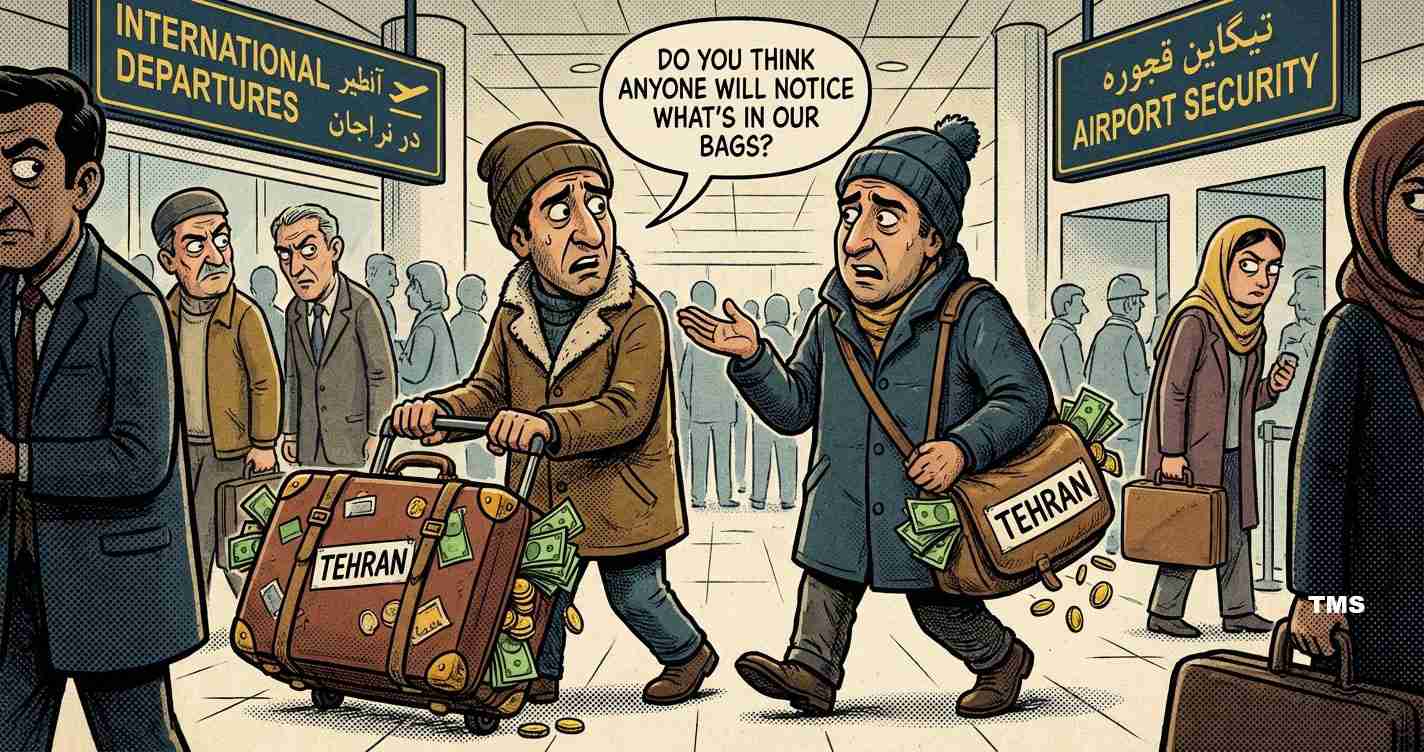
Iran capital flight as US Treasury sanctions elite networks
On January 15, 2026, the U.S. Treasury’s Office of Foreign Assets Control (OFAC) sanctioned five Iranian officials and shadow banking networks amid reports elites wired tens of millions abroad during hyperinflation and mass protests.
- US Treasury sanctions: OFAC targeted five officials and networks tied to siphoning natural-resource revenue and to violent protest crackdowns.
- Iran capital flight: Multiple reports say regime figures moved tens — and in some accounts hundreds — of millions, with transfers traced to Dubai and crypto channels; see also Fox News.
- Reported sums: Estimates vary — some media cite up to $1.5 billion in outflows and allegations of ~$328 million linked to Mojtaba Khamenei — figures unconfirmed by Iranian authorities or named banks (The Media Line).
- Human cost and instability: Outflows follow mass protests since Dec. 28, 2025, amid reports of thousands killed and a collapsing rial trading near 1.1 million per USD.
Sanctions and named targets
The Treasury’s Jan. 15 release identifies five officials and a network of shadow banks and brokers that move revenue from Iran’s natural resources into hidden accounts. The designations target those tied to violent crackdowns on protesters and entities that enable money laundering. The announcement warns of secondary sanctions for banks and intermediaries that facilitate these transfers. For details see the U.S. Treasury press release.
Reported capital flight: methods and destinations
Multiple outlets and analysts report elites moved funds using banks, trade channels and cryptocurrencies. Dubai is repeatedly named as a major destination, and transfers reportedly flowed through Gulf channels and crypto rails into hard assets or foreign accounts. Analysts note these are consistent with past tactics during bouts of instability.
Estimates and caveats: Some reporting suggests as much as $1.5 billion could have left Iran, with allegations of individual transfers — including roughly $328 million linked to Mojtaba Khamenei — based on tracked transfers and intelligence leads but not independently confirmed by Iranian authorities or multinational banks (AInvest, The Media Line).
U.S. response: tracking, freezing and enforcement
Treasury Secretary Scott Bessent described the reported outflows as evidence of elite panic, calling the movements like “rats fleeing the ship”
. The Treasury said it will intensify efforts to track assets tied to sanctioned figures and to freeze or seize funds when possible. The Jan. 15 action is part of a broader effort that includes designations invoking authorities to impose secondary sanctions on facilitators (OFAC release).
Policy implications: Officials signaled a shift toward sustained enforcement, increasing scrutiny on banks and payment channels. Observers expect the U.S. to pressure third-country banks to block suspect flows or risk sanctions, raising compliance demands on correspondent banks and fintechs.
Economic and political context in Iran
Iran is under deep economic strain: sanctions have reduced oil sales and constrained international banking access. The rial’s steep fall — trading near 1.1 million per US dollar in some reports — has fueled rampant inflation, shortages and rising unemployment. President Pezeshkian has acknowledged economic “shortcomings.” These pressures have helped spark mass protests since late December, with reports of heavy-handed crackdowns and high casualty counts (Special Eurasia).
Expert analysis and reporting limits
Analysts’ view: Behnam Ben Taleblu, a senior fellow at the Foundation for Defense of Democracies, argued reporters’ accounts — even if not fully confirmed — underscore the need for rapid action to “track, freeze and seize” assets tied to sanctioned figures (Fox News).
Verification caveats: Open-source reports and single-source leaks can overstate or misattribute sums. Some media cite intelligence or bank-tracking data; others rely on leaked documents. Iranian authorities have not issued a full public denial, and many details remain unverified. The mix of confirmed Treasury designations and evolving media reports means facts may shift as investigations proceed (Iran International, Iran International).
Implications for the United States
- National security and enforcement: Large capital outflows would test Treasury and Justice Department tools to track, freeze and seize illicit funds and to penalize banks that facilitate concealment (Treasury).
- Financial institutions: Third-country banks and correspondent institutions may face higher due-diligence demands and potential secondary sanctions, increasing compliance costs and prompting stricter controls on Iran-linked flows.
- Diplomacy and partner coordination: The U.S. will likely press Gulf partners and financial hubs — notably the UAE — for cooperation on tracing and freezing accounts, balancing enforcement with diplomatic sensitivities (AInvest).
- Market and regional effects: Sustained asset exodus would underscore Iran’s instability, affect regional risk assessments and complicate efforts to monitor illicit finance moving into opaque networks.
Reporting notes and sources
This article draws on the Treasury Department’s Jan. 15 press release and reporting from multiple outlets covering alleged capital movements and Iran’s economic and political turmoil. Primary sources cited:
- U.S. Treasury press release
- AInvest report on capital flight
- Fox News coverage
- The Media Line analysis
- Iran International report 1
- Iran International report 2
- Special Eurasia
- Commentary in The Japan Times
Ongoing investigations: Authorities say investigations into transfers and intermediaries continue. U.S. officials will press banks and partners to aid tracing efforts and to hold accountable those who move or hide assets tied to sanctioned Iranian officials (Treasury).



