Federal judge blocks Trump National Guard Portland deployment, says order likely exceeded presidential authority
A federal judge in Oregon has temporarily blocked President Donald Trump’s order to federalize 200 Oregon National Guard troops bound for Portland, finding the administration likely exceeded presidential authority while a lawsuit by state and city officials proceeds.
- Temporary restraining order: Judge Karin Immergut blocked the 60‑day, 200‑member Title 10 deployment while the lawsuit moves forward.
- Who sued: Oregon Attorney General Dan Rayfield, Governor Tina Kotek and Portland Mayor Keith Wilson challenged the federalization as unlawful.
- Core issue: The dispute tests whether a president may federalize a state National Guard for domestic law enforcement without clear statutory or constitutional authority.
Federal judge blocks deployment
On October 5, 2025, Judge Karin Immergut issued a temporary restraining order preventing the Trump administration from converting Oregon National Guard units to Title 10 federal status for use in Portland. The court concluded the plaintiffs have shown a likelihood of success in proving the administration exceeded its authority. The restraining order pauses a planned 60‑day, 200‑member deployment while the litigation continues.
The ruling follows filings and argument that federalization for domestic law enforcement would exceed both statutory limits and constitutional constraints, and that the administration relied on an overstated narrative to justify the move. For contemporaneous reporting, see the India Today coverage and reporting by Oregon Public Broadcasting.
Why state leaders sued
State and city officials filed the lawsuit one day after the president announced the deployment on September 28. Plaintiffs — including Governor Tina Kotek, Attorney General Dan Rayfield and Mayor Keith Wilson — argued the administration relied on an exaggerated description of Portland as “war‑ravaged” and that no public safety emergency existed warranting federalization.
The complaint centers on the use of Title 10, which brings Guard units under federal control. Oregon’s suit contends that designating the Guard as Title 10 to perform domestic law enforcement functions amounted to an unlawful seizure of state military resources and threatened state sovereignty.
Sequence of judges and recusal
The case was initially assigned to Judge Michael Simon, who later recused himself after the administration highlighted political comments by his spouse. Judge Immergut, a Trump appointee, then took the matter and issued the temporary restraining order.
Deployment context and protest activity
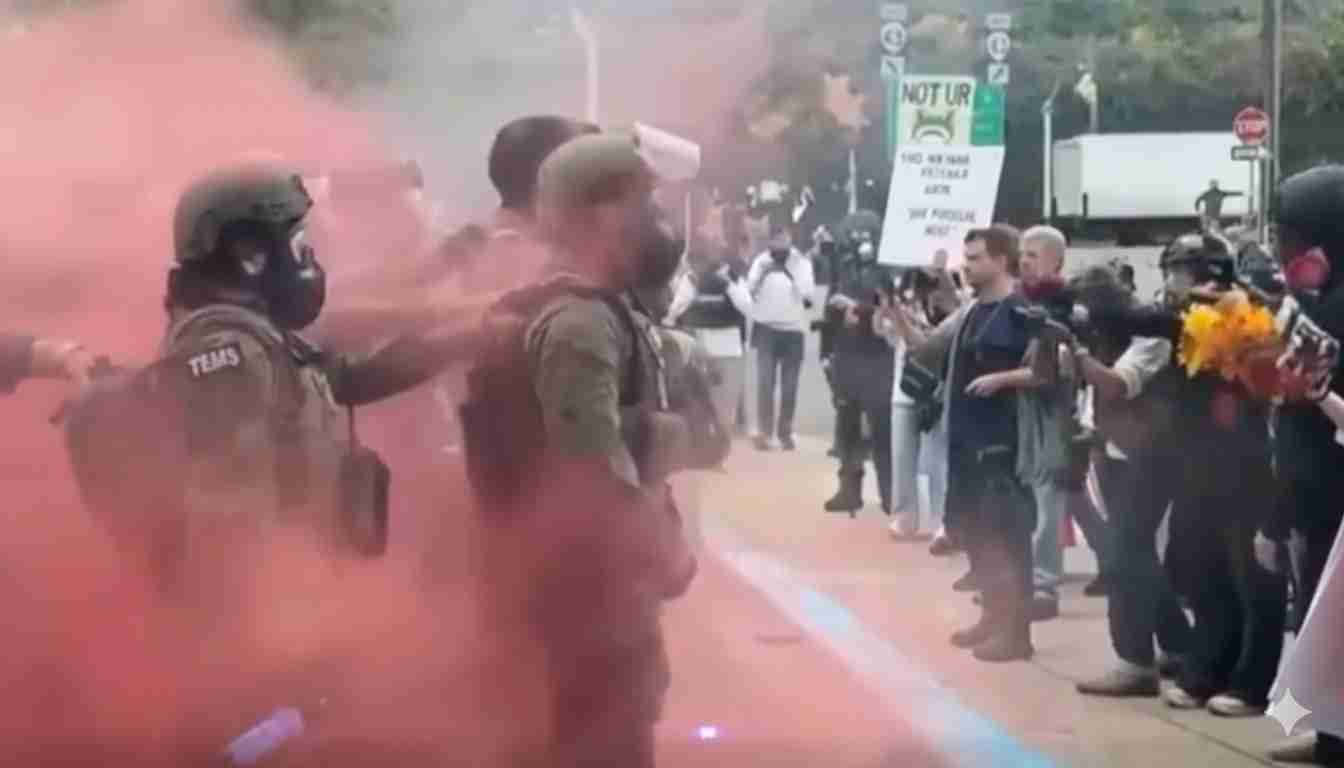
Federal officials pointed to protests outside a Portland Immigration and Customs Enforcement (ICE) facility that drew several hundred people and included clashes with law enforcement; there were reports of minor arrests. Critics noted the White House used older footage in public statements, which state and city leaders said misrepresented current conditions.
Governor Kotek told the White House she saw no public safety crisis that would justify federal control of the Guard. Mayor Wilson held a press conference denouncing the deployment as unnecessary and politically motivated, saying the city is “on the rise,” not “war‑ravaged.” See additional context in the OPB deployment report and earlier OPB coverage of the lawsuit.
Legal stakes: presidential power and federalism
Legal experts say the case tests important limits on presidential authority to federalize state forces for domestic law enforcement. Plaintiffs warn that allowing such federalization without clear justification would erode state control over their National Guard units and upset the balance between federal and state authority.
The government argues it has a duty to protect federal property and personnel and that the president can act when federal facilities face threats. The court must weigh those protections against statutes and constitutional safeguards designed to prevent executive overreach.
Public statements and political pushback
The dispute has unfolded in high‑profile public statements. The White House described the deployment as necessary to protect immigration facilities from “domestic terrorists.” Oregon and Portland officials pushed back, accusing federal officials of relying on outdated footage from 2020 to justify intervention.
Civil liberties groups and legal scholars have weighed in, warning that broad authority to seize state Guard units could be misused in future political disputes between federal and state governments.
Nationwide focus and precedent
Although the dispute centers on Portland, the case carries national implications. A court ruling upholding broad federal power to federalize state military resources for domestic purposes could become a precedent affecting responses to protests, immigration enforcement and other events where federal officials claim threats to federal property or personnel.
Implications for the United States
Economic: Immediate financial effects are limited, but routine federalization could shift training, equipment and budget responsibilities to states and create uncertainty for local businesses during deployments.
Political: The ruling sharpens debates over federal power and state sovereignty, and may mobilize voters concerned about executive overreach or those prioritizing protection of federal infrastructure.
Social and cultural: The TRO may lower near‑term tensions in Portland by preventing federal troops from entering the city, but the legal fight could deepen distrust between local leaders and the federal government and inform national political narratives ahead of upcoming elections.
Practical applications for residents
For Portland residents, the immediate effect is clear: no federalized National Guard troops will be deployed to Portland for now. Local law enforcement and state resources remain the primary responders while the court resolves the statutory and constitutional questions surrounding Title 10 federalization.
Sources and further reading
- India Today coverage of the court order and legal filings
- Oregon Public Broadcasting reporting on the deployment, lawsuit and local response
- OPB report on the administration’s authorization of the National Guard deployment
Bottom line: The temporary restraining order preserves the status quo while the court examines whether the administration lawfully used Title 10 and whether the president may federalize state Guard forces for domestic law enforcement in these circumstances.