
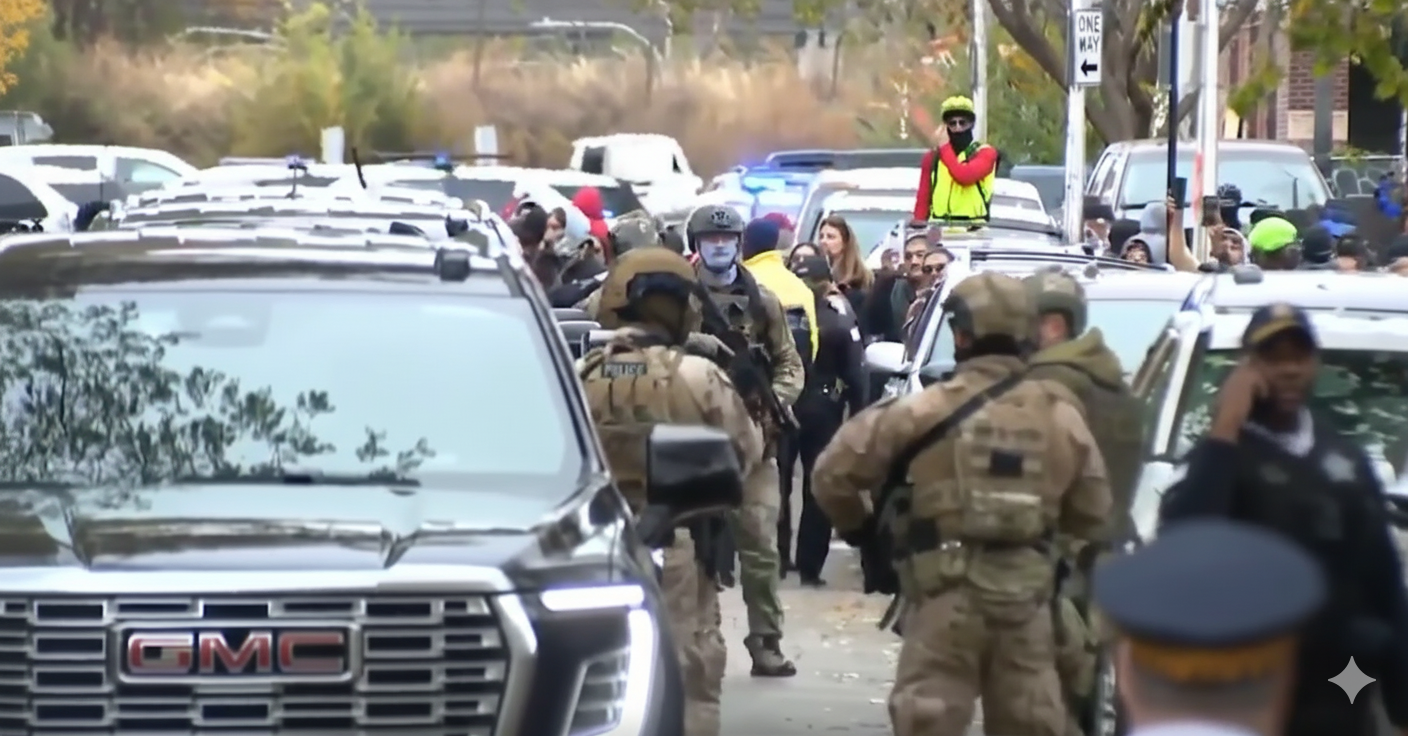
Manhunt Underway After Shots Fired at Border Patrol in Little Village; Crowd Hurls Paint Cans, Bricks at Federal Vehicles
A manhunt is underway in Chicago’s Little Village after an unknown suspect allegedly opened fire on U.S. Border Patrol agents near 26th Street and Kedzie Avenue. The shooter fled in a black Jeep; no agents were injured.
- Active manhunt: Video shows a suspect firing from a vehicle; video footage and local reporting document the scene.
- No federal injuries: Chicago police say no Border Patrol or other federal officers were hurt, according to the Chicago Police Department.
- Crowd clashes: After shots were fired, a group threw a paint can and bricks at Border Patrol vehicles and chemical agents were used to disperse the crowd (on-scene footage).
- Policy context: The Department of Homeland Security described the scene as “dynamic” and cited a rising trend of assaults on federal officers; legal limits on riot-control tools in Chicago provide important context (legal limits).
What happened: shots fired at Border Patrol in Little Village
Authorities report the shooting occurred during an immigration enforcement action near 26th Street and Kedzie Avenue in Little Village, a busy, predominantly Latino neighborhood on Chicago’s Southwest Side. Video posted online and local accounts appear to show a person firing at federal officers from a black Jeep before fleeing the scene.
Multiple agencies responded. The FBI, U.S. Customs and Border Protection, Border Patrol and Chicago Police are coordinating the search. Officials emphasized that, according to their records, no Border Patrol or other federal officers were injured during the exchange of gunfire.
Response on the scene: crowd clashes and chemical agents
Following the reported shooting, crowds gathered and several people became hostile toward federal vehicles. Officials said a paint can and bricks were thrown at Border Patrol vehicles, creating a volatile scene that required additional support from the Chicago Police Department.
“The scene was dynamic,” officials from the Department of Homeland Security said, warning of a growing trend of assaults and obstruction against federal officers.
To secure the area and allow investigators to continue the search for the shooter, authorities deployed chemical agents—tear gas or similar products—to disperse the crowd. Local video and reporting documented the chaos that followed the initial gunfire (on-scene footage; WTTW report).
Federal and local coordination; legal and policy context
DHS framed the incident as part of a broader pattern of confrontations during immigration enforcement operations and said the agency is tracking an increase in assaults and obstruction. At the same time, Chicago courts have restricted certain crowd-control tools available to federal immigration officers, complicating tactical decisions on the ground.
Those judicial limits—outlined in recent rulings—factor into how federal officers may respond when crowds become violent, and they add a legal layer to operational coordination between agencies (restrictions on federal agents’ use of riot-control agents).
Investigators, witnesses and public information
Law enforcement said investigators are reviewing video, canvassing the neighborhood and interviewing witnesses. At this stage there are no public reports of arrests related to the shooting itself, and the shooter’s identity remains unknown.
Authorities noted that resident-posted videos and other eyewitness material are central to identifying the black Jeep and the person who fired. Officials urged anyone with information to contact local police or federal investigators to aid the ongoing manhunt.
National patterns and rising tensions
This incident reflects a larger pattern of community-federal clashes during immigration operations across several U.S. cities. Federal officials warn of an uptick in attacks and obstructions; community activists, civil rights groups and some local officials argue that armed federal enforcement in neighborhoods can escalate tensions.
Judicial oversight in Chicago and debates over the appropriate use of riot-control methods create competing pressures: calls for officer safety and coordination versus demands for limits and oversight to protect civil liberties.
Implications for the United States
- Economic: Additional security, overtime and property damage can increase costs for local governments and federal agencies.
- Political: The incident may intensify debate over immigration enforcement, local-federal cooperation and public safety messaging.
- Social: Violent confrontations risk deepening mistrust between immigrant communities and law enforcement, while also hardening views about rule of law and officer safety.
- Civic guidance: Residents are urged to stay aware of official notices, avoid crowds during active operations and report tips to authorities.
What this means for policy and enforcement
Lawmakers and agency leaders are likely to cite this case in arguments over training, local cooperation agreements and legal authority for federal officers. Civil liberties advocates and some city officials may press for continued limits and oversight of federal tactics; the outcome in Chicago could influence national policy debates.
Where investigators go next
Authorities asked anyone with information to contact local police or federal investigators. Investigators emphasized the importance of video and eyewitness accounts in identifying the black Jeep and the shooter. Officials said they will update the public as verified information becomes available.
Sources and reporting
- Local reporting and scene video (WTTW)
- On-scene footage posted publicly
- Context on legal limits for federal agents in Chicago
Authorities continue to investigate. No arrests have been reported at this time. Officials urge anyone with information about the suspect or the black Jeep to come forward.



