Trump administration withholds $40M from California over trucker English proficiency rules, citing safety lapses
Lede: The Trump administration has frozen $40 million in federal MCSAP funds for California after finding the state failed to adopt and enforce federal English Language Proficiency standards for commercial truck drivers, citing road‑safety concerns and non‑compliance with FMCSA rules.
Key takeaways
- Federal action: The U.S. DOT has withheld at least $40 million in Motor Carrier Safety Assistance Program funds to pressure California to adopt and enforce federal English Language Proficiency (ELP) rules. U.S. DOT announcement
- FMCSA findings: Federal investigators concluded California did not adopt compatible ELP laws or enforce ELP requirements in practice, allowing some drivers with documented ELP violations to remain on the road. CDL Life summary
- Funding effects: Withheld MCSAP grants fund roadside inspections, safety audits, enforcement and education programs; withholding aims to protect uniform nationwide safety standards.
- Evidence scope: Public DOT and FMCSA documents emphasize systemic safety risks but do not cite a single documented fatal crash directly tied to the ELP licensing issue. Bloomberg Government coverage
Background: Trump California Trucker English Rules and the federal standard
The federal English Language Proficiency (ELP) standards were adopted to ensure commercial motor vehicle drivers can read road signs, understand safety warnings and communicate with law enforcement. The standards require states to adopt compatible rules and evaluate drivers for English proficiency during roadside inspections. The administration framed these rules as part of a broader push to improve road safety and reduce driver errors tied to language barriers. See the U.S. DOT press release for the department’s statement.
FMCSA investigation and California ELP standards
The Federal Motor Carrier Safety Administration (FMCSA) launched a compliance investigation into state implementation of the federal ELP standards. Federal findings indicate California did not adopt laws or regulations compatible with the federal requirements and failed to enforce them in practice. According to reporting and summaries, the agency concluded this allowed drivers who failed ELP assessments elsewhere to continue operating in California without penalty. For a summary of those findings, see the CDL Life article.
Motor Carrier Safety Assistance Program funding implications
The $40 million at stake comes from the Motor Carrier Safety Assistance Program (MCSAP). Those grants fund:
- Roadside inspections
- Compliance reviews of trucking companies
- Traffic enforcement aimed at preventing large‑truck crashes
- Outreach and education for drivers and carriers
The Department of Transportation says withholding funds is meant to pressure states to align with federal safety standards and ensure MCSAP dollars support programs that reduce crash risk. See the DOT guidance.
Fatal crash reporting and the limits of public records
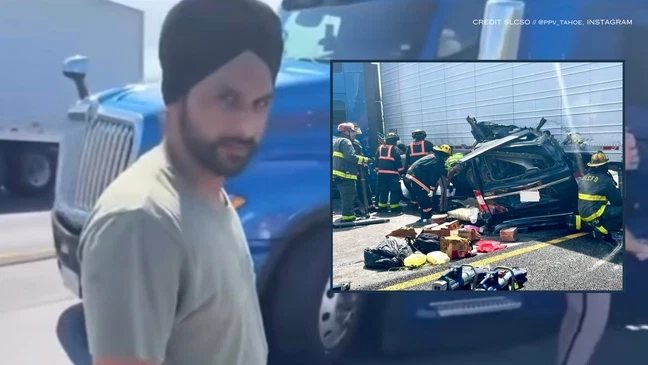
Some reporting and public concern link ELP enforcement weaknesses to serious crashes. Federal officials emphasize ELP compliance as a safety priority. However, the formal reports and federal statements about the funding holdback do not cite a specific fatal crash involving an undocumented driver who failed an English test but nevertheless obtained a commercial license. Coverage notes the general safety rationale but does not document a direct causal incident tied to the funding decision. See Bloomberg Government reporting for context.
U.S. Transportation Secretary’s remarks and federal rationale
Transportation Secretary Sean P. Duffy said California’s refusal to enforce federal ELP standards represents a “fundamental safety issue” affecting motorists and enforcement personnel. In the department’s announcement, Duffy tied the decision to the need for uniform safety rules across states and to the effective use of federal funds intended to reduce truck‑involved crashes. For the department’s full statement, consult the U.S. DOT press release.
What California must do to restore funding
Federal officials say California can have MCSAP funds restored by:
- Adopting state laws or regulations that match federal ELP requirements
- Actively enforcing those rules during inspections
- Placing drivers out of service if they fail proficiency assessments
- Demonstrating compliance per DOT guidance to regain funding
The DOT’s guidance outlines clear steps for states to demonstrate compliance and regain MCSAP support. See the department guidance.
Legal and policy questions
The funding dispute raises complex legal and policy issues about federal leverage and state regulatory autonomy. MCSAP grants are federal dollars that come with compliance conditions. Supporters of stricter enforcement argue uniform standards protect all road users; critics say states should retain flexibility and question whether withholding funds is the best tool to change state law. The DOT frames its action as enforcing national safety standards tied to federal grant requirements. See analysis in reporting such as Bloomberg Government.
National safety context and nationwide effects
Federal officials argue consistent ELP enforcement nationwide helps protect drivers, first responders and the traveling public. Allowing one large state to exempt drivers from ELP enforcement could undermine interstate safety and uniformity of the commercial licensing system. The withholding of MCSAP funds could prompt other states to review compliance or trigger wider disputes over federal grant conditions and regulatory choices. See the U.S. DOT announcement for the federal stance.
Reactions and political stakes
Political tension: The action is likely to deepen tensions between the federal administration and California leadership. Federal officials suggested the state’s stance complicates the grant relationship; California officials often view such moves as federal overreach. Media and trade coverage track the dispute and note broader implications for federal‑state relations in transportation policy. See reporting from Bloomberg Government and the CDL Life summary.
Implications for United States of America
Economic impact
State and local safety programs rely on MCSAP grants for inspections and enforcement. With $40 million withheld from California, inspection capacity and safety outreach could be reduced in the nation’s most populous state, which handles a high volume of freight. That may increase pressure on federal and local budgets to fill gaps or shift workload to neighboring states.
Political consequences
The move sharpens federal‑state conflict over regulatory authority. It could become a test case for how aggressively the federal government uses funding leverage to enforce national standards, and it may influence how political constituencies view federal grant conditions.
Social effects
Public safety is central: uneven ELP enforcement across states raises concerns about inconsistent rules affecting crash prevention and post‑crash response. Communities along major freight corridors may press for stronger enforcement to reduce large‑truck crash risks.
Cultural relevance
Language and integration debates intersect with practical safety policy. Supporters view ELP rules as commonsense safety measures; opponents may see federal enforcement as imposing cultural expectations through grant conditions.
Practical applications for daily life
Truck inspections and training funded by MCSAP often remove unsafe vehicles and drivers from the road. Reduced funding could mean fewer roadside checks and delayed enforcement, translating to potential risks for commuters, school buses and other drivers who share highways with heavy trucks.
Sources and further reading
- Trump’s Transportation Secretary Sean P. Duffy Announces Consequences for California’s Failure to Enforce ELP Standards — U.S. Department of Transportation press release
- Trump threatens $40 million for California over trucker licenses — Bloomberg Government coverage
- US DOT to withhold $40M from California for failure to enforce English rules for truck drivers — CDL Life summary
“This is a fundamental safety issue,” — Transportation Secretary Sean P. Duffy, on California’s ELP enforcement and the withholding of MCSAP funds.
Reporting emphasizes road safety and federal compliance. Public DOT and FMCSA documents set out conditions for restoring funds and the agency’s safety rationale; they do not cite a single, documented fatal crash directly tied to the specific licensing issue referenced in some discussions.