
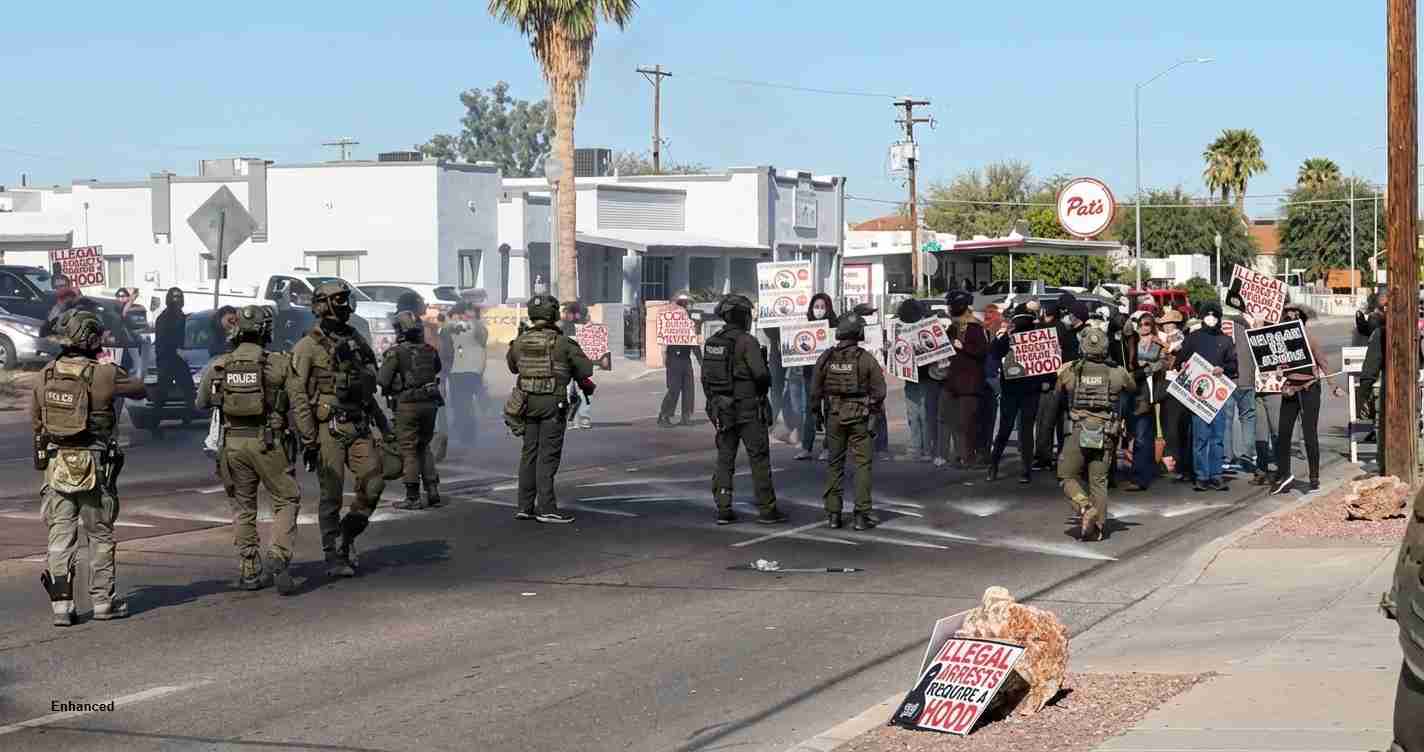
Wild scene in Tucson: Up to 200 surround ICE team at Taco Giro; pepper spray, tear-gas munitions and arrests spark outcry
A federal immigration operation at Taco Giro in Tucson escalated as 100–200 protesters surrounded agents; federal teams used pepper spray, tear-gas–type munitions and pepper balls, prompting arrests and condemnation after Rep. Adelita Grijalva was pepper-sprayed and debate intensified.
- Location: Taco Giro, North Grande Avenue, Barrio Hollywood, Tucson — sources include Fox News, Arizona Luminaria, and Tucson Sentinel.
- Operation: Homeland Security Investigations and IRS Criminal Investigation executed 16 search warrants across southern Arizona — reported by Fox News and Tucson Sentinel.
- Force used: Federal agents deployed pepper spray, smoke/flash devices and pepper balls; local officials say Tucson police did not fire munitions (The Marshall Project, Arizona Luminaria, KGUN9 video).
- Crowd size: Between about 100 and 200 demonstrators; a smaller confrontational group engaged agents (Fox News).
Taco Giro operation and wider investigation
Federal agents arrived at Taco Giro at roughly 9 a.m. as part of a multi-site, years-long probe into alleged immigration and tax violations connected to a restaurant chain in southern Arizona. ICE confirmed that Homeland Security Investigations and the IRS Criminal Investigation executed search warrants at multiple locations — 16 warrants in all across southern Arizona — according to on-scene reporting from Fox News and Tucson Sentinel.
Video and witness accounts show federal teams entering Taco Giro and nearby residences. Some men were photographed handcuffed and loaded into federal vehicles at a nearby home; later local reporting linked arrests in Sierra Vista and other locations to the same operation. Officials described the probe as lengthy; formal charging documents were not publicly available in early reports (The Marshall Project, Fox News, Tucson Sentinel).
Size and nature of the protest
Once word spread about the raid, an estimated 100–200 people gathered outside Taco Giro. Many carried identical signs and chanted anti-ICE slogans; while most stayed on sidewalks, a smaller group of roughly a dozen took a confrontational stance near the gated parking lot (Fox News).
Eyewitness video shows the gate locked with agents and vehicles inside while people massed outside. Protesters allegedly used a bike lock on the gate, temporarily trapping agents and vehicles until a tactical unit cut the lock. As agents exited, clouds from chemical agents and smoke filled the lot (Fox News).
Escalation and use of crowd-control devices
Federal tactical teams deployed a range of crowd-control measures to clear the area. Reports and video document agents using pepper spray, firing pepper balls and tossing canisters described by witnesses as tear-gas–type devices. Local reporters and community video captured people coughing and seeking fresh air amid clouds of chemical agents (The Marshall Project, Arizona Luminaria, Tucson Sentinel).
City officials stressed that Tucson Police did not fire munitions; TPD’s on-scene role was described as traffic control and general security while federal agents conducted the operation (KGUN9 video).
Detentions, arrests and chain of custody
Reports indicate multiple detentions tied to the broader cooperative operation. Local media documented at least two protesters arrested in the parking-lot confrontation and others detained in federal vehicles. Across southern Arizona, local reporting placed the total arrests related to the operation at roughly 46 people, including actions in Sierra Vista. ICE declined to provide detailed on-scene information about identities or charges of those detained (Fox News, The Marshall Project, KGUN9 video, Tucson Sentinel).
Rep. Grijalva and others exposed to chemical agents
U.S. Rep. Adelita Grijalva, newly sworn in and representing the district that includes Barrio Hollywood, went to the scene to ask federal agents where arrestees were being taken. Video recorded by Arizona Luminaria shows Grijalva approaching masked officers and coughing amid a cloud of chemical agent; she says she identified herself as a member of Congress and was pepper-sprayed and pushed while questioning agents. Journalists and community members also reported being hit with pepper spray or similar agents (Arizona Luminaria, The Marshall Project, Tucson Sentinel).
Local leaders weigh in
Tucson Mayor Regina Romero and Vice Mayor Lane Santa Cruz condemned what they described as disproportionate use of force by federal agents. Their joint statement criticized the deployment of smoke grenades, pepper balls and pepper spray against the public — including an elected member of Congress — and called for accountability. City leaders reiterated that Tucson police did not deploy the munitions and linked the tactics to broader federal policies (Arizona Luminaria).
Aftermath and continuing demonstrations
Following the Taco Giro clash, a smaller group of protesters moved to the ICE field office on Tucson’s south side. Tucson police reported encountering about 25 protesters there; the crowd dispersed when officers arrived. Federal agents again used pepper spray from inside the ICE compound as protesters banged on the fence, though local reports indicated no major injuries. Officials and advocates urged witnesses to preserve photos and video in case of investigations into federal conduct (Arizona Luminaria, Tucson Sentinel).
Context: enforcement, sanctuary debate and public safety
The Taco Giro incident fits into a national conversation over federal immigration enforcement in cities. Advocates framed the protests as neighborhood defense of local businesses and workers, renewing calls for stronger municipal protections for undocumented residents. Supporters of the operation say federal authorities were enforcing immigration and tax laws and pursuing potential criminal violations. The clash raised questions about officer identification, communication with city leaders and rules governing crowd-control tactics (Arizona Luminaria, Tucson Sentinel, The Marshall Project).
Implications for the United States
Images of agents using pepper spray and munitions against crowds that included elected officials and journalists are likely to drive calls for federal transparency, clearer officer identification and standard policies governing interactions with members of Congress and the media. The clash may lead to legal reviews, congressional inquiries and renewed debate over balancing enforcement with protections for bystanders, workers and communities. Federal authorities, meanwhile, maintain they were executing long-standing investigations and retain the right to secure scenes and make arrests (Fox News; The Marshall Project; Arizona Luminaria; Tucson Sentinel).
“Witnesses should preserve photos and video in case of investigations into federal conduct,” advocates and local reporters urged after the clashes.



